


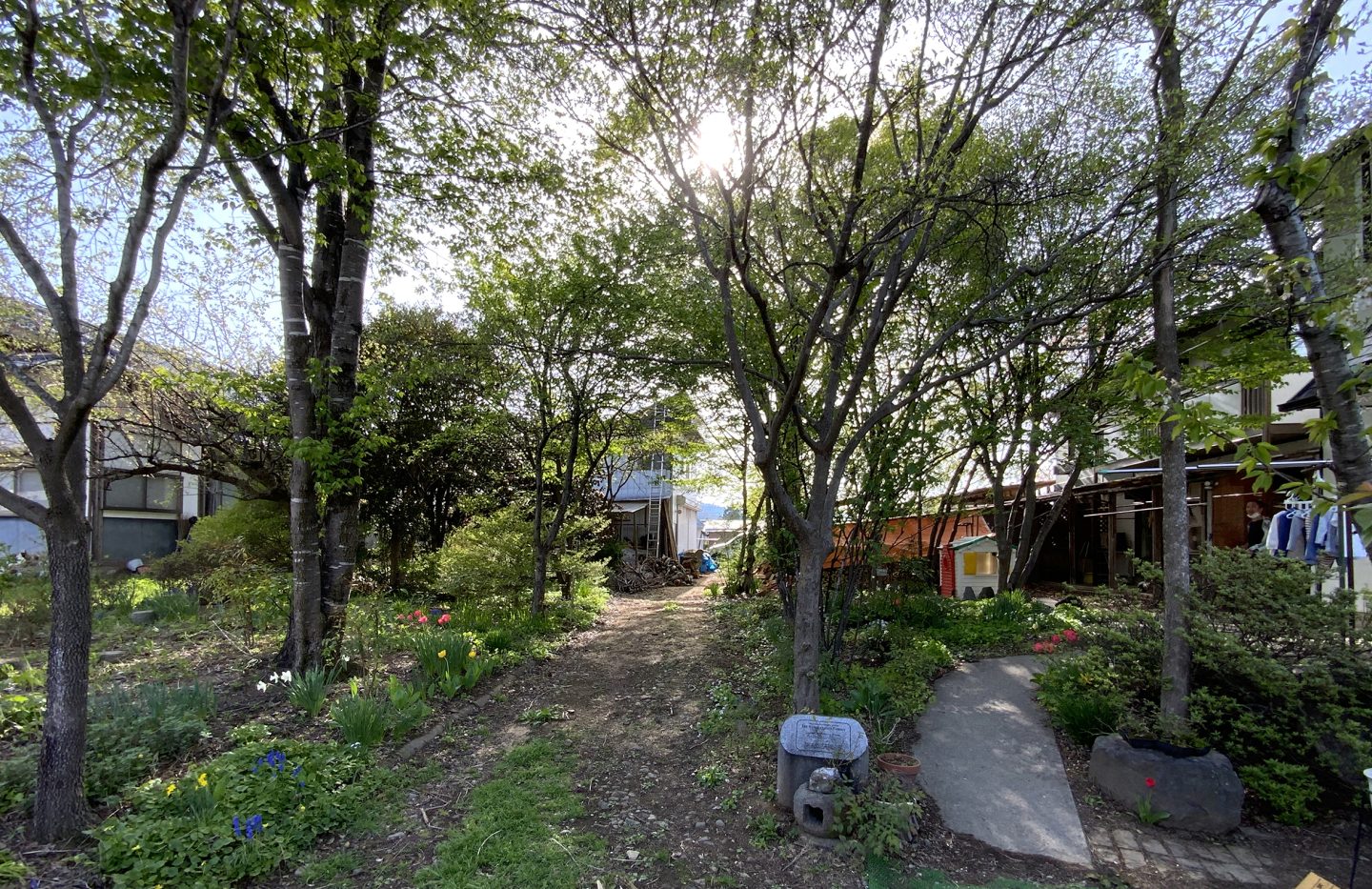
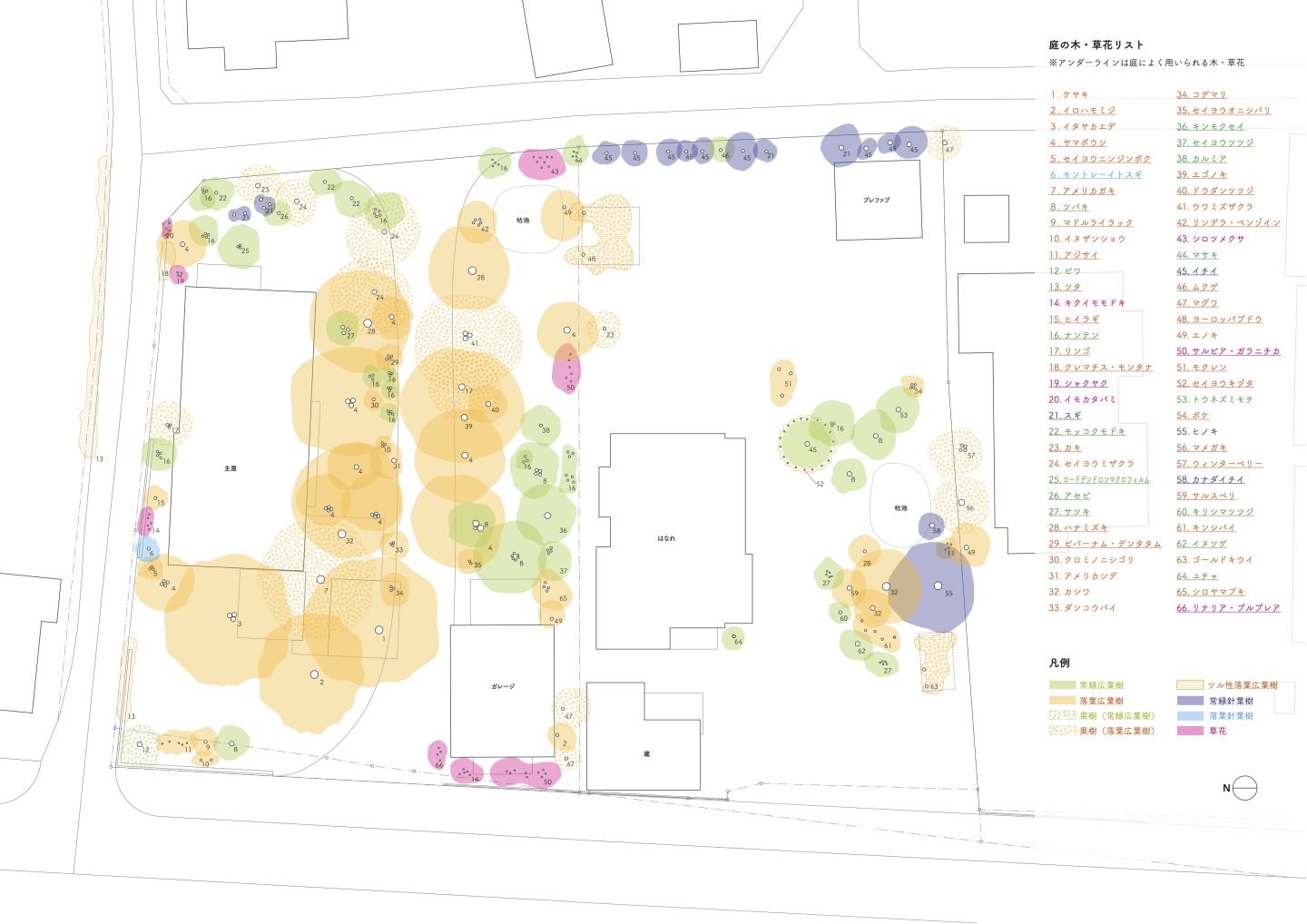
敷地の庭は、多種多様な木・草花が生い茂った雑木林となっていました。施主の家族が「小さな森」の運動に倣って、近隣の山から木を植え替えて庭を作り始めたことで、雑木林となっていきました。雑木林の庭を通り抜ける、緑のトンネルのような道は、近所の幼稚園の散歩ルートとして親しまれ、烏骨鶏が歩き回り、木陰でくつろいだりと、庭を超えたスケールの木々があらゆる生物の居場所と出来事をつくりだしています。
ひとつひとつの植物を調べてみると、ほとんどが雑木で形成されていることがわかります。雑木に溢れた庭では、夏には木陰となり、秋には紅葉し、冬は葉が落ちて常緑樹が際立ち、時々果実がなったり、色とりどりの草花が木々の間に咲きます。庭の表情は日々うつろっていきます。庭は隣地にも拡張し、更新され続けています。
The garden on the site had grown into a thicket where a wide variety of trees and grasses flourished. Inspired by the “Small Forest” movement, the client’s family began creating the garden by transplanting trees from nearby hills, gradually forming this wooded landscape.
Paths that pass through the thicket like green tunnels have become a familiar walking route for a nearby kindergarten. Birds roam freely, people rest in the shade of trees, and trees at a scale beyond the garden itself create places and moments for a wide range of living beings.
Looking closely at each plant, it becomes clear that most of the garden is composed of miscellaneous trees. In this thicket-filled garden, dense foliage provides shade in summer; leaves turn color in autumn; in winter, leaves fall and evergreen trees emerge in relief. At times, fruit appears, and colorful grasses and flowers bloom between the trees. The expression of the garden changes day by day. It continues to expand into adjacent land and is constantly being renewed.