


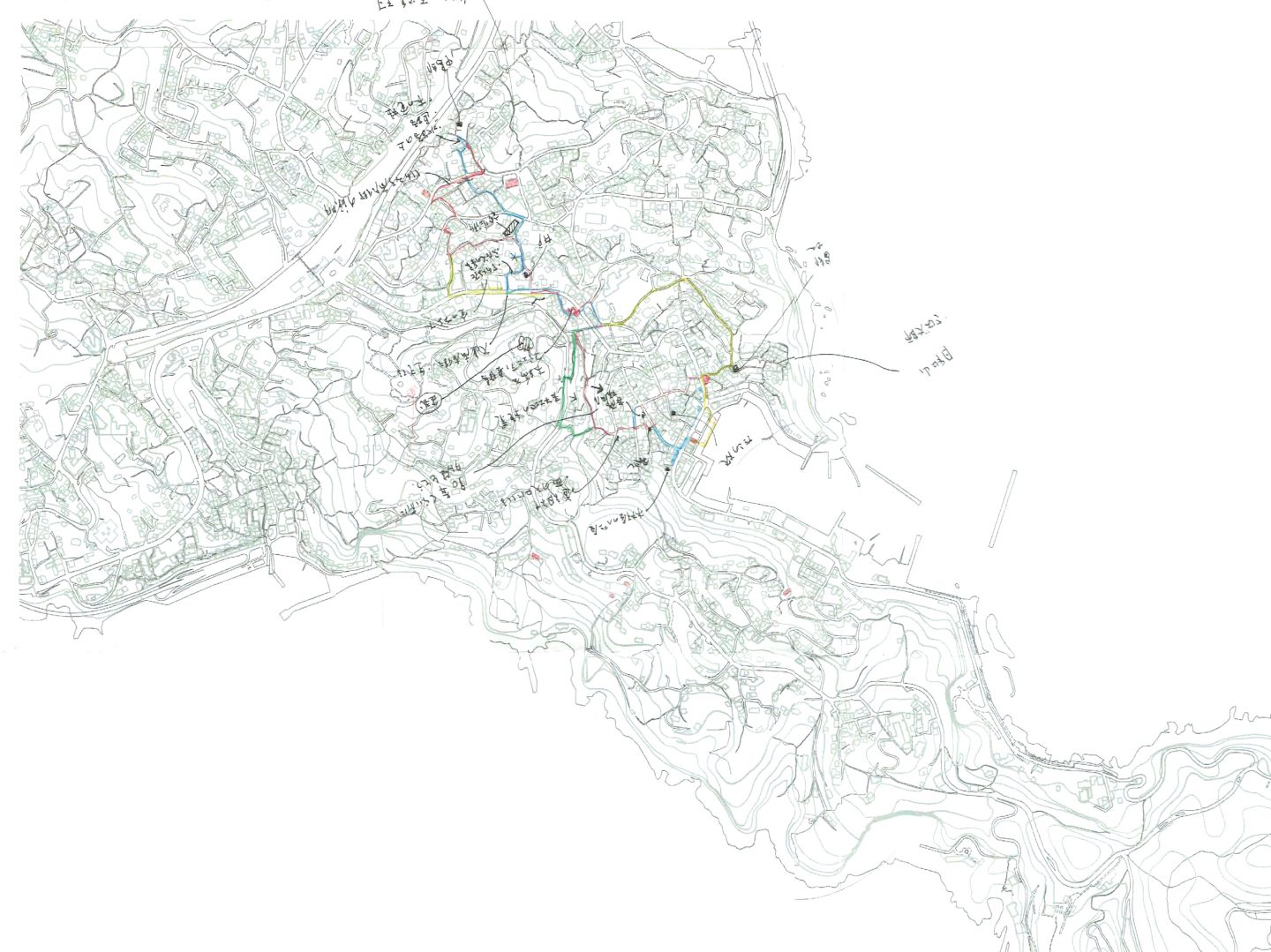
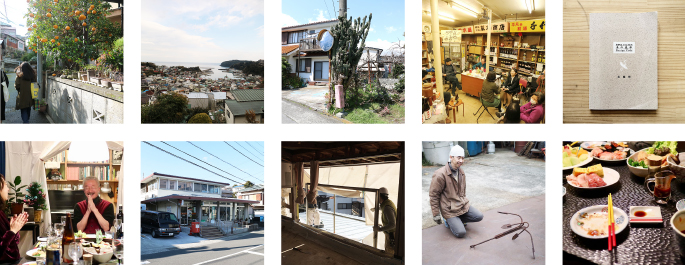
お施主さんである「真鶴出版」のおふたりは、ゲストを連れて真鶴のことを紹介するまち歩きを3年間続けています。このプロジェクトは、カタログから素材を選ぶのではなく、このまち歩きを通じて真鶴半島に存在する色々な素材の採集ができないかと考えました。
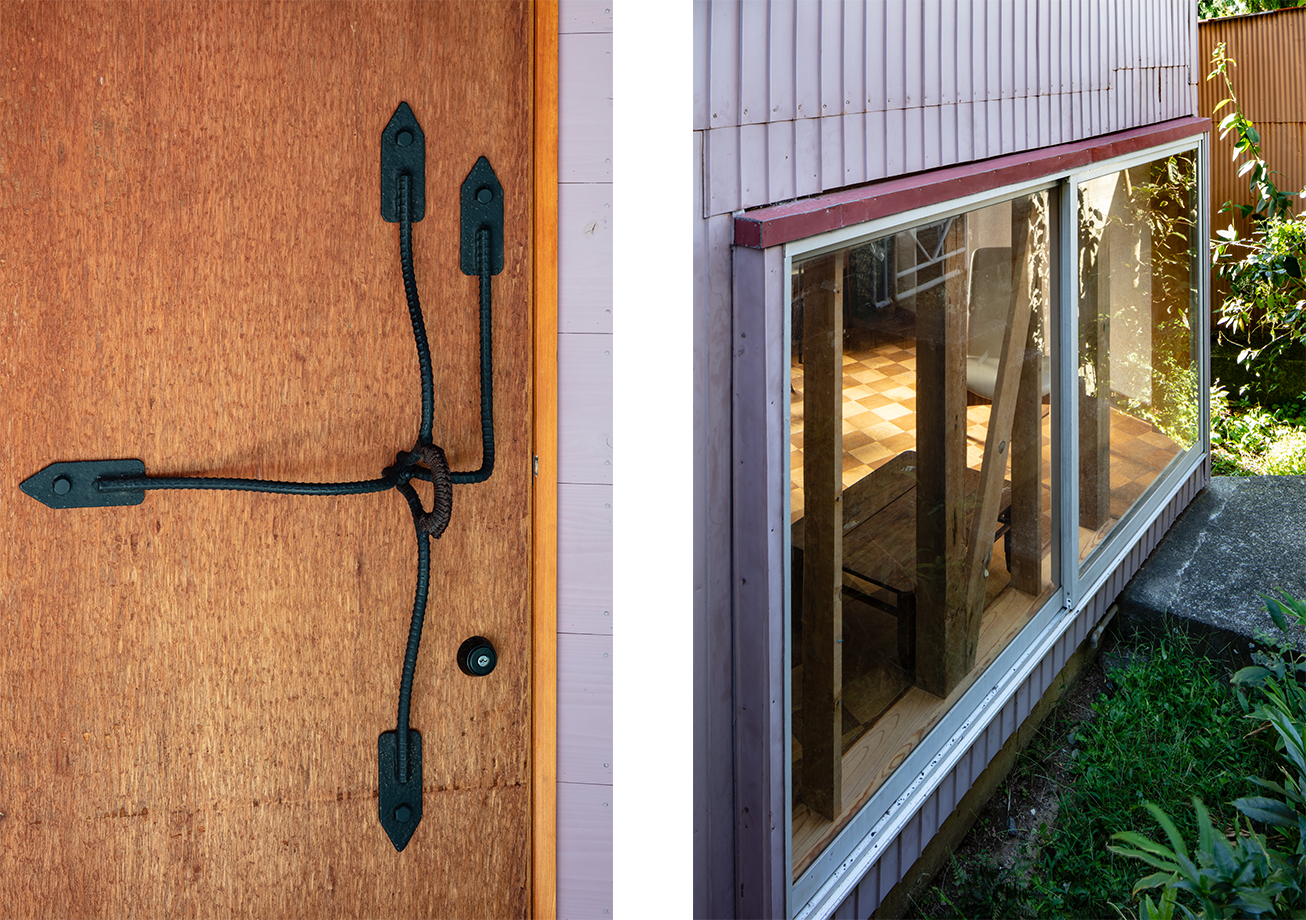
例えば、海のそばにある干物屋さんに相談し、漁師さんから壊れたイカリを譲っていただきました。それを真鶴に住む鉄のアーティストに加工してもらい、扉の取っ手となっています。また、半島の付け根あたりにある郵便局からアルミサッシを譲り受け、道との境界に大きな借景窓としてしつらえています。他にも、亜熱帯的な気候が育てた巨大なサボテンの肉片を拾ってきて、軒先でじっくりと育てていたりなど、事物の由来はさまざまです。
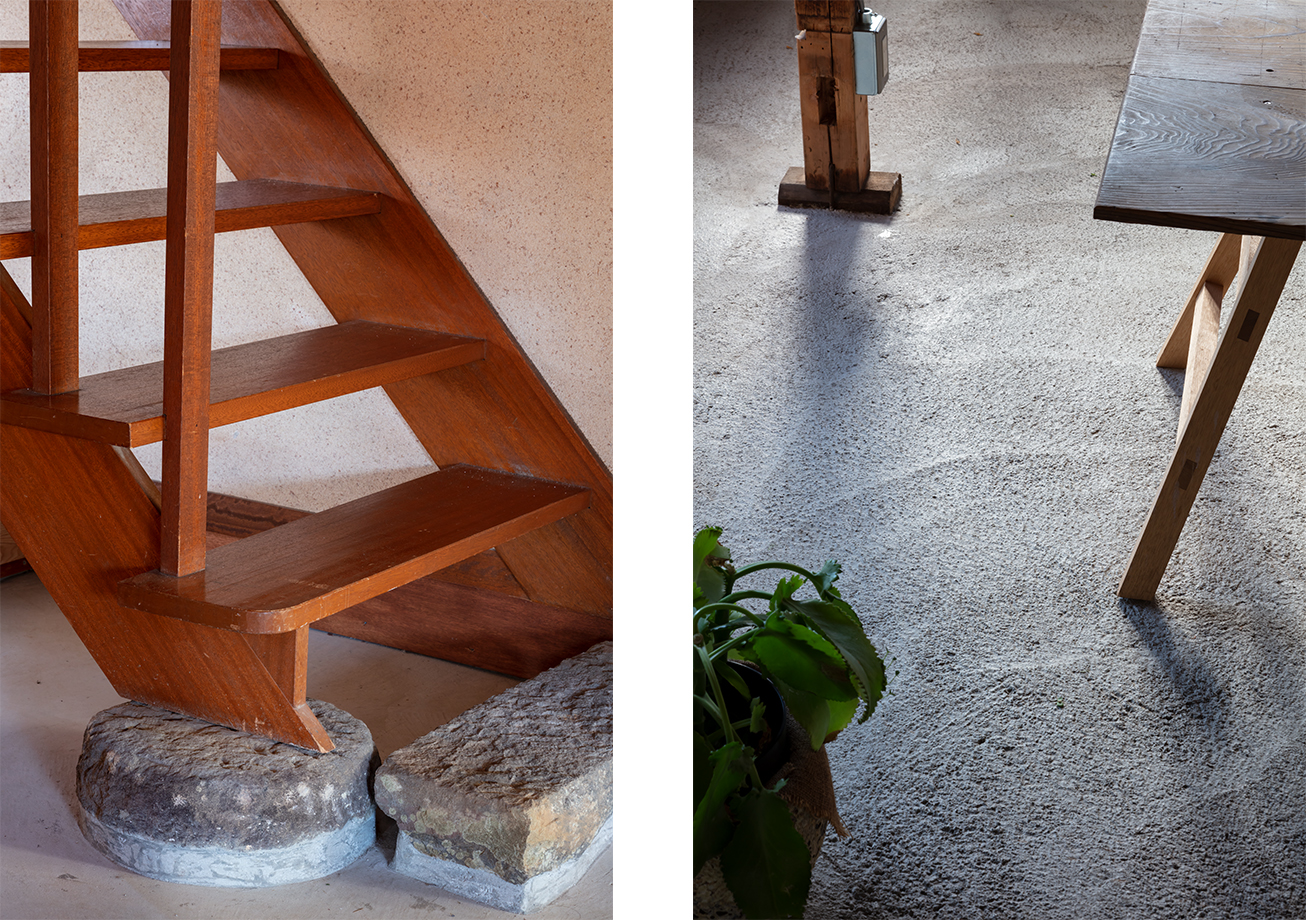
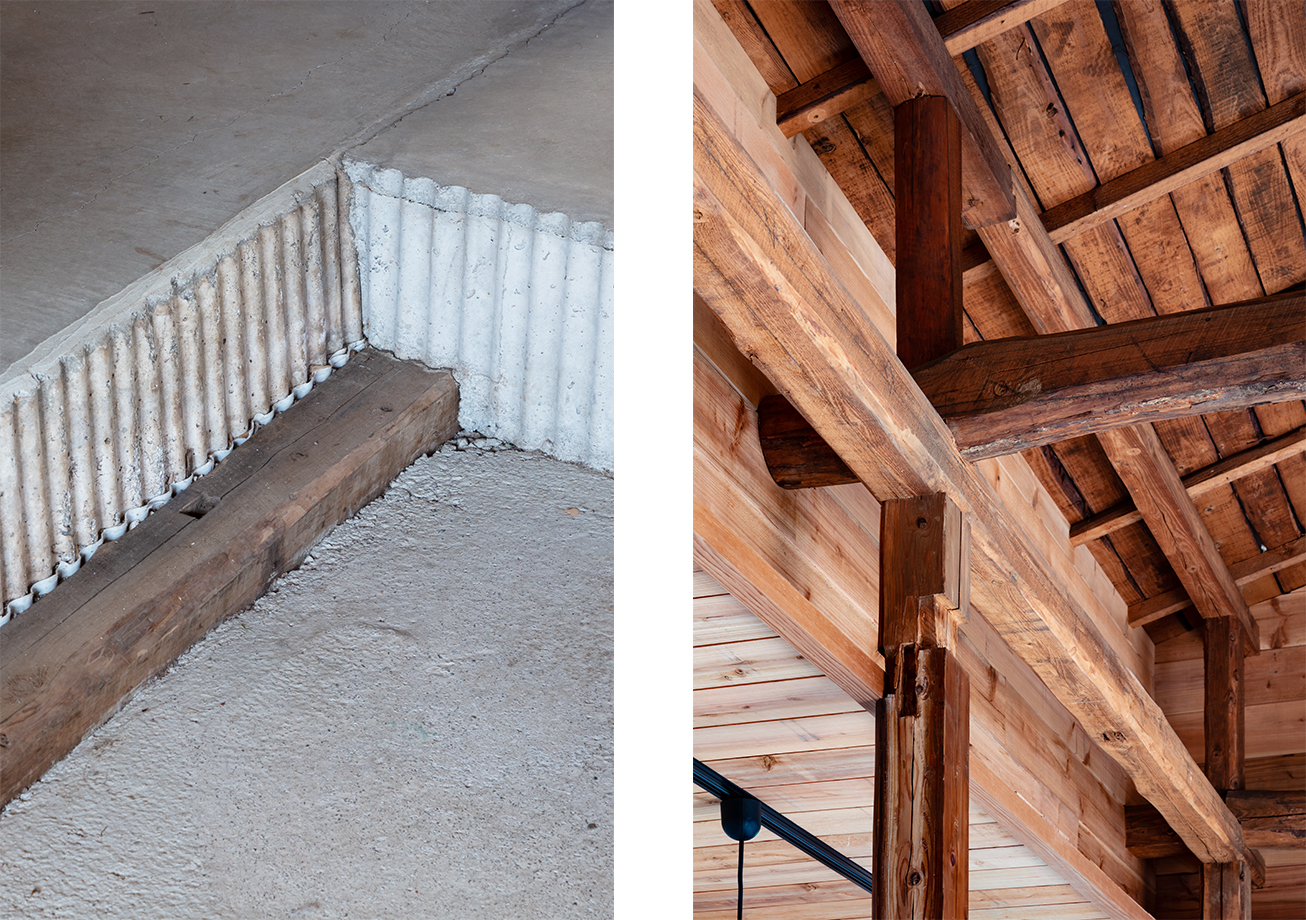
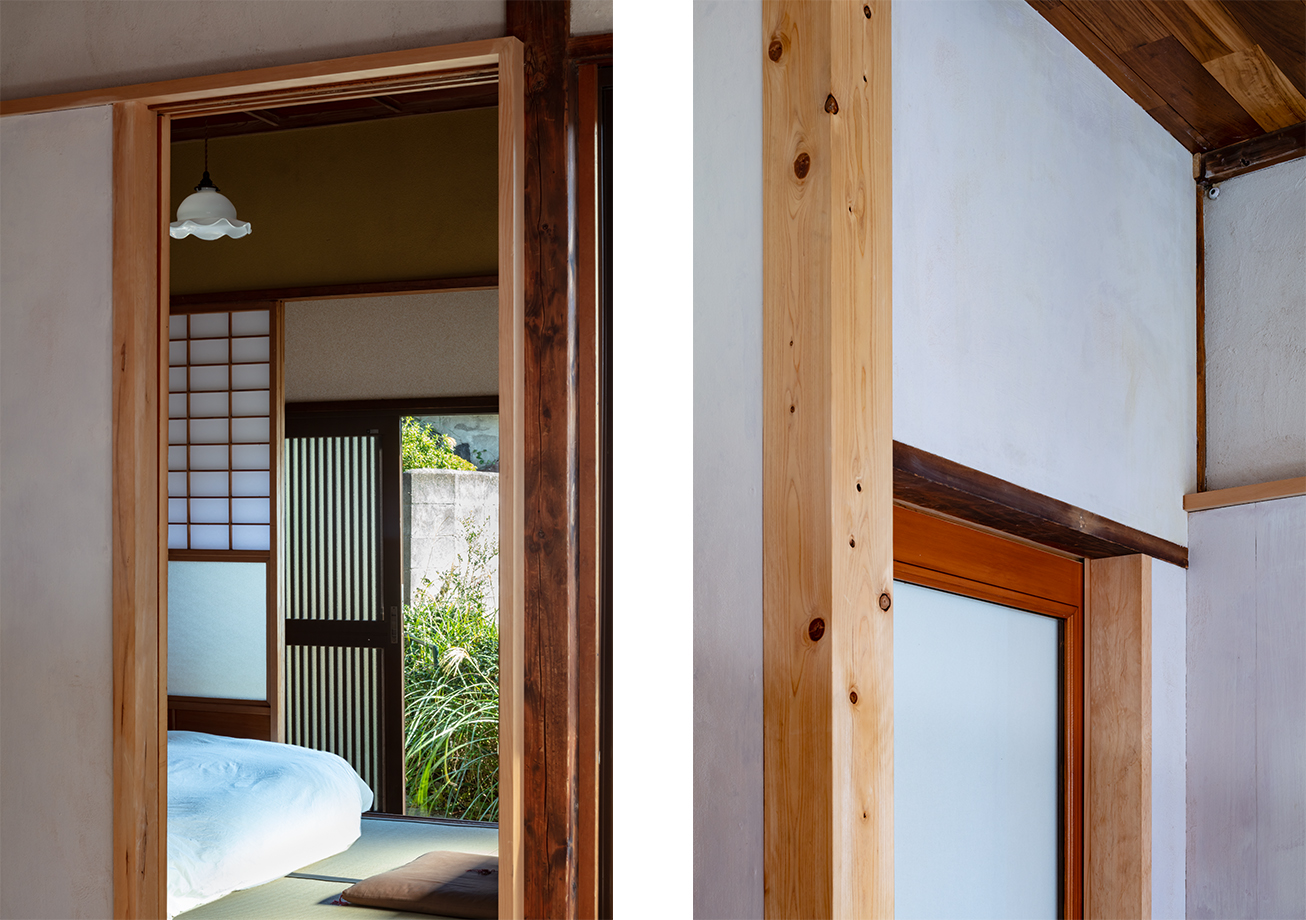
半島内に散らばるいろいろな質感を、人の手やネットワークを介して予定不調和に集合させてみることで、真鶴の民芸のような建築をつくれないかと試みています。
The clients, who run Mashikaku Publishing, have been guiding guests on walks through Mashikaku for the past three years, introducing them to the town and its everyday life. Rather than selecting materials from a catalogue, this project emerged from the question of whether materials scattered across the Mashikaku Peninsula could be discovered through these walks.
For example, after consulting a dry-goods shop near the sea, a broken squid jig was received from a fisherman. This was then processed by an iron artist living in Mashikaku and used as a door handle. Aluminum sashes were also obtained from a former post office located at the foot of the peninsula and reassembled as a large boundary element along the street. In another instance, a massive cactus—grown in the peninsula’s subtropical climate—was collected and slowly cultivated at the tip of the eaves. Each object carries its own distinct origin.
By gathering these varied textures scattered across the peninsula through human hands and local networks—allowing them to come together in unexpected ways—we are exploring the possibility of creating an architecture that resembles the vernacular practices of Mashikaku.