


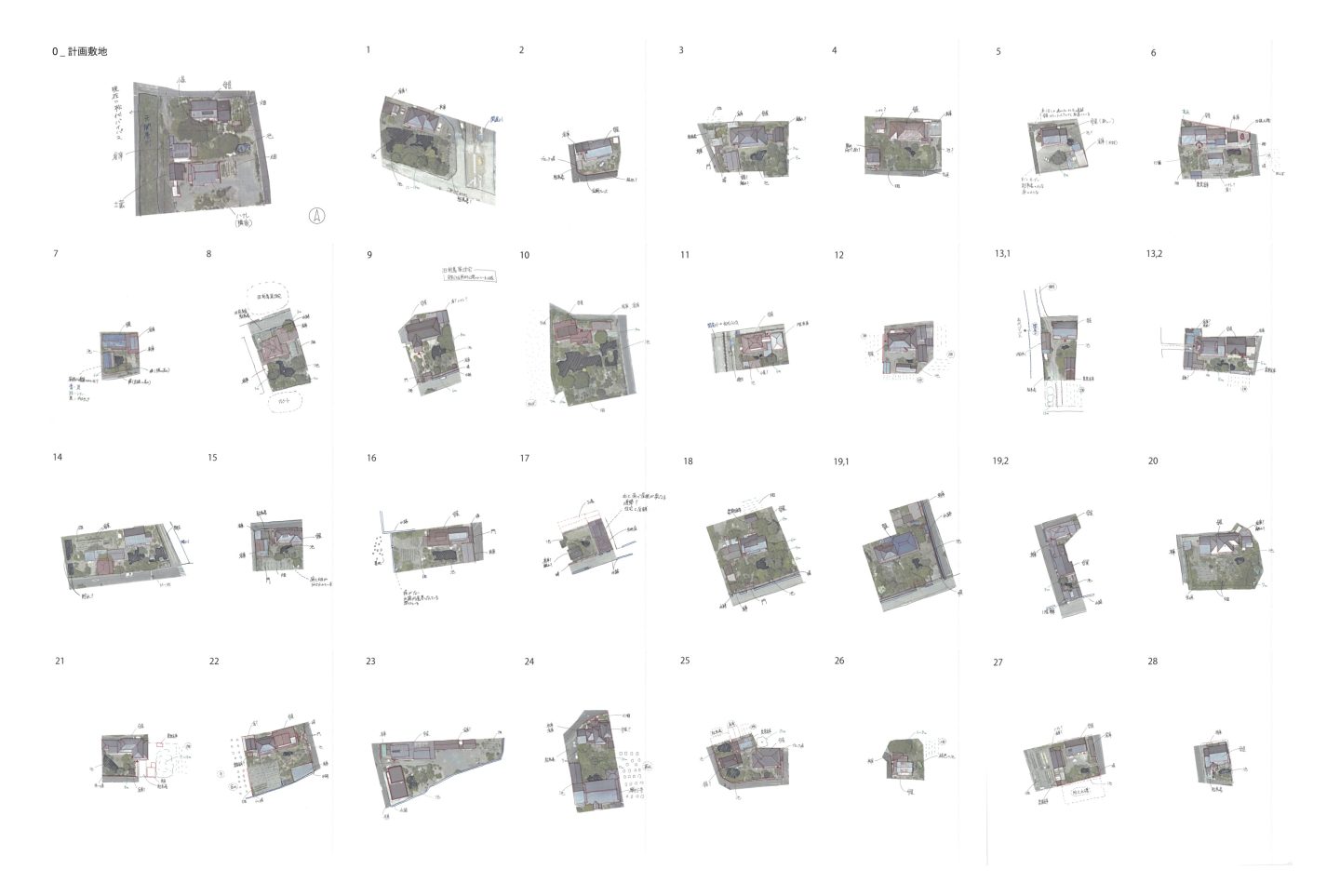
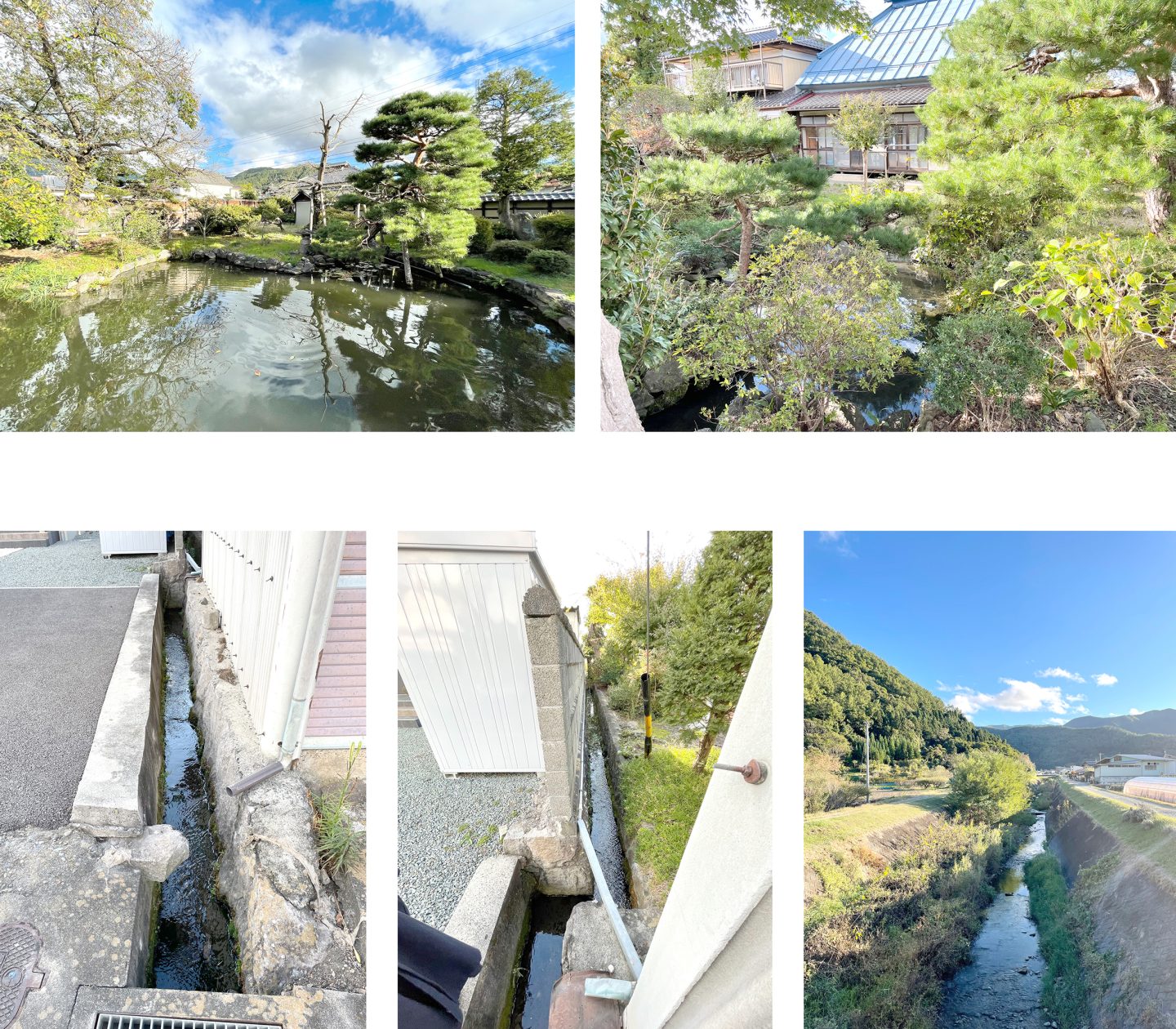
松代のまちでは、湧水が多く点在し、敷地をまたいで水路が街中に張り巡らされています。そのため、松代にある住居の庭園には池があることが多く、そこでは、鯉やザリガニやヤマメを放ったり、暑い日には散水をしたり、農業用水に用いたり、水質が良かった時代には洗濯や洗面などの生活用水としても用いられていたようです。現在では、水路・池・河川は道路建設や住宅開発によって、徐々に埋め戻され暗渠化され、水の循環が失われつつあります。池のある庭の風景を、航空写真から家・庭・池の配置の関係をリサーチし、類型化しようと試みました。暮らしと自然環境とここに住まう人たちの関係に根ざした「関係」が、境界の観察から見えてきました。
(図版:田中優衣・松野真翔/2021夏インターン)
In Matsushiro, abundant spring water emerges at many points, and waterways extend throughout the town, running through and across residential plots. As a result, many gardens in Matsushiro contain ponds, where carp, crayfish, and char are kept; water is sprinkled on hot days; used for agricultural irrigation; and, in times when water quality was better, even used as domestic water for washing clothes and dishes.
Today, however, waterways, ponds, and rivers are gradually being filled in, culverted, and darkened as a result of road construction and residential development, and the circulation of water is slowly being lost.
We researched the landscape of gardens with ponds by examining aerial photographs and studying the relationships between houses, gardens, and ponds, attempting to classify these patterns. Through observing these boundaries, we were able to see relationships rooted in everyday life, the natural environment, and the people who live here.
(Drawings: Yuka Tanaka, Maho Matsuno / Summer Internship 2021)