


仙台にある特別養護老人ホームなどからなる福祉施設「ライフの学校」の前庭を改修し、誰でも立ち寄ることができる公園のような場所とするプロジェクト。
近隣の家財など「まちの資源」を嫁入りするように運び込み、完成のない庭をつくっています。
庭が街に開かれた日
庭の設計を始めてから1年半が過ぎ、夏の終わりに庭が開かれた。春の初めにはまだ芽吹いていなかった植物が、夏の終わりにはぐんぐんと背を伸ばし生い茂っている。
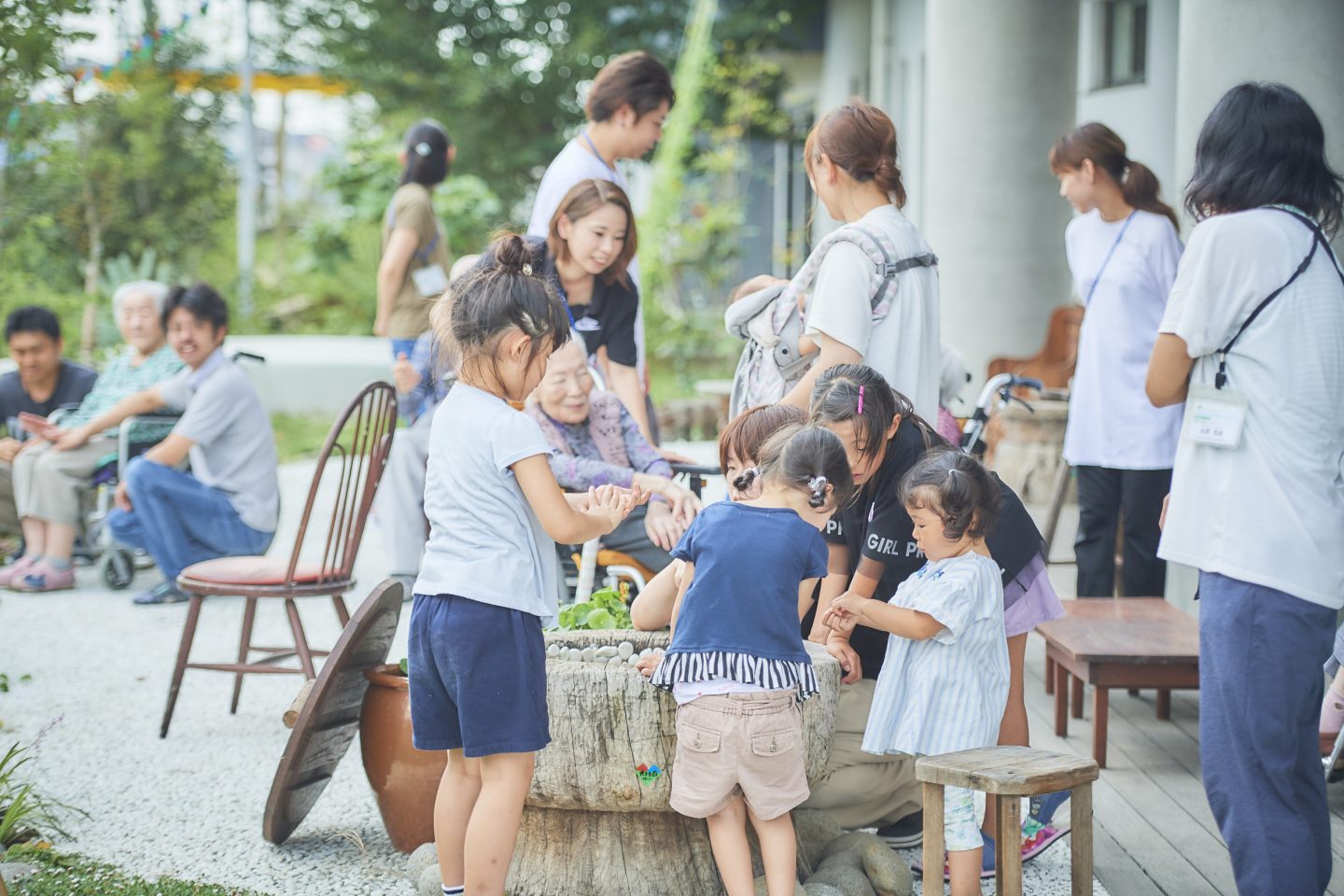
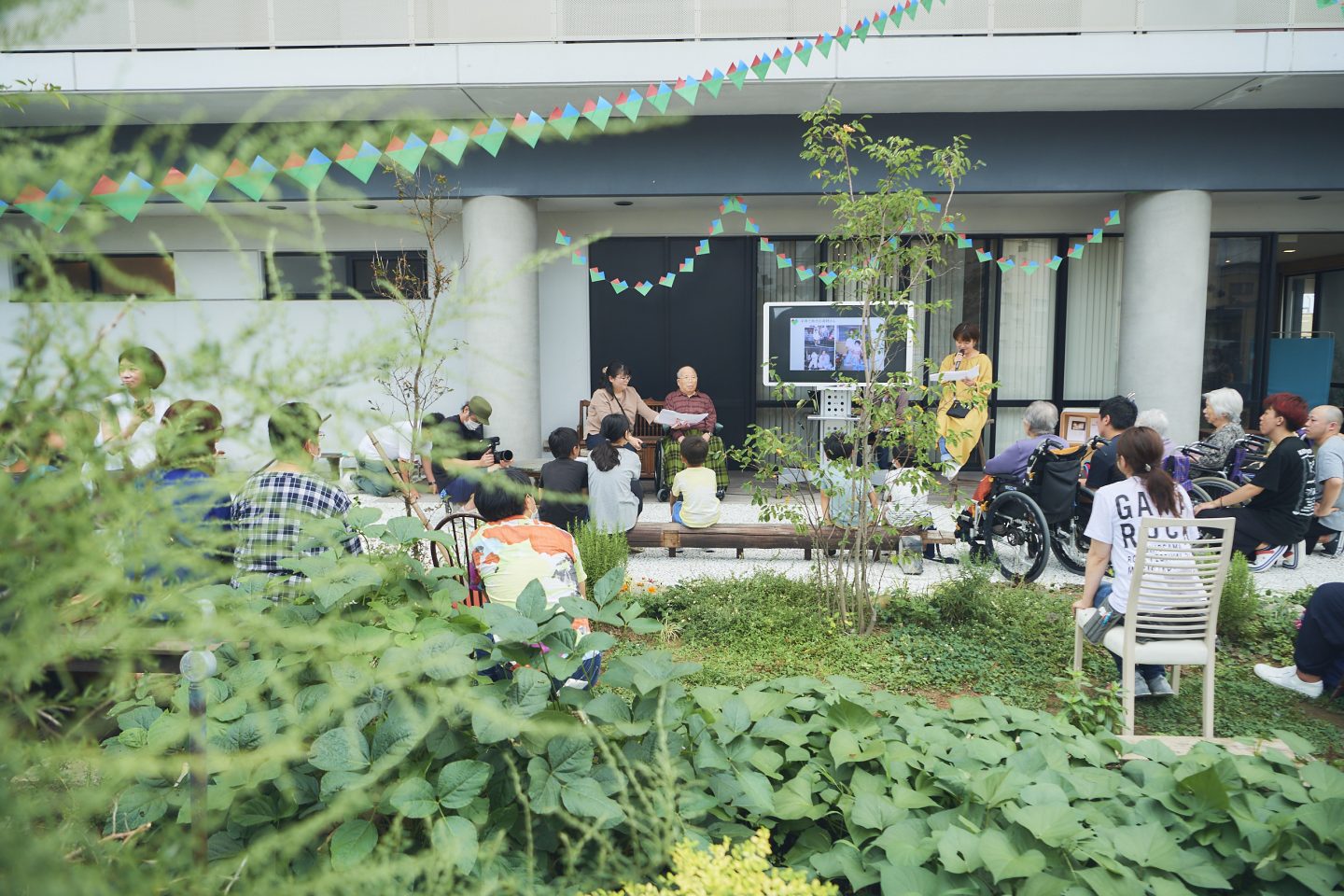
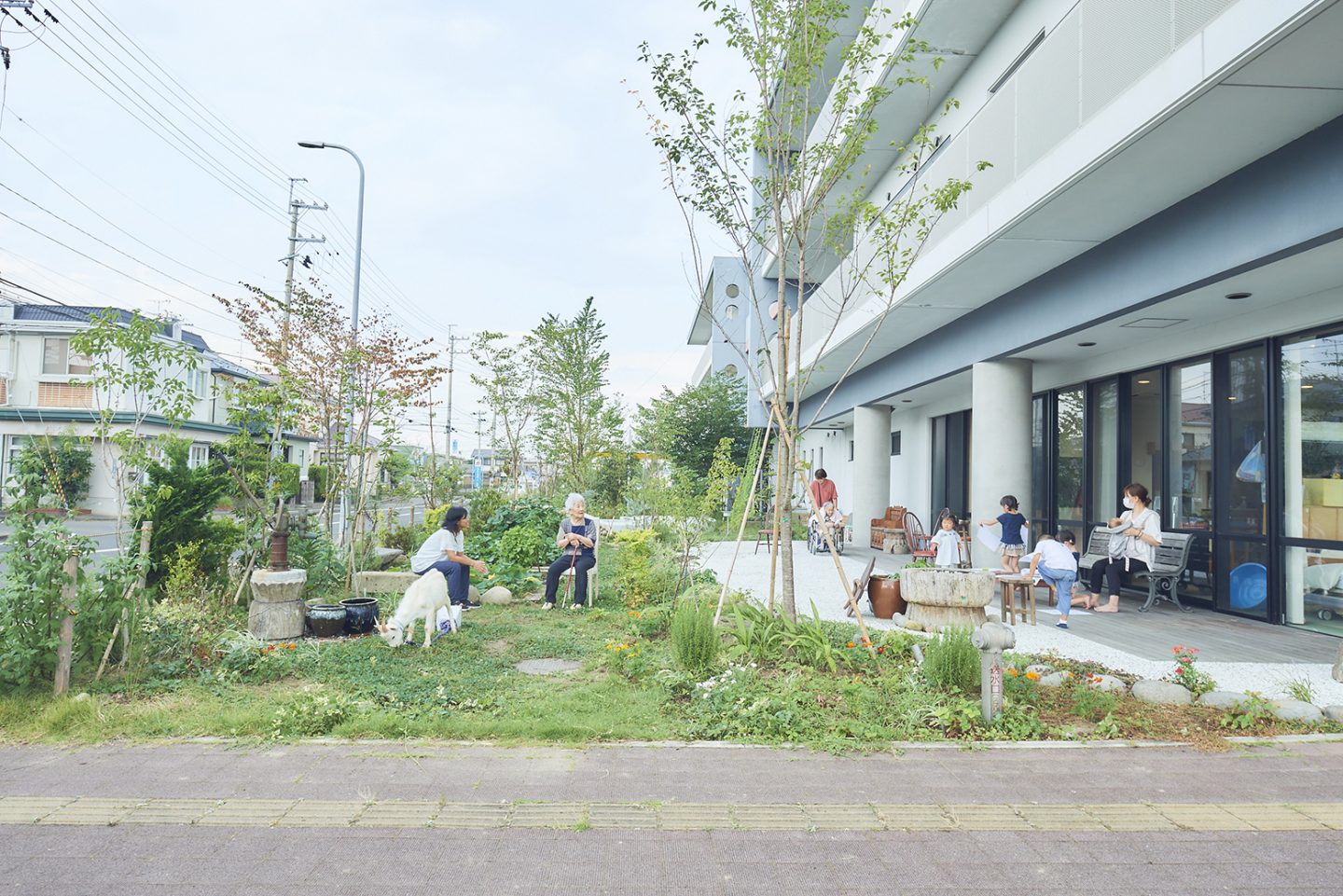
新しくなったテラスは舞台として見立てられ、ホーム入居者のおじいちゃんが車掌だったころの話をみんなにしてくれた。偶然やってきた子どもも職員も、私たち設計者も、輪になってそれを聞く。ふと横を見ると、庭開きに合わせてやってきた食いしん坊のヤギが一心不乱に草を食べている。この庭の雑草の手入れは、理事長がコツコツと行い、それを見た職員が手伝い、就労支援の一環として仕事を生み、ヤギのエサにもなるなど、小さな生態系が庭を巡る。さまざまなサイクルが重なり合う共依存な関係に、庭を触媒とした社会圏の強度を感じる。
まちの資源のお引っ越し
初めて訪れたこの場所は、敷地境界線に沿って生垣が整列しており、施設を街から隔離する箱のような庭だった。施主である社会福祉法人ライフの学校から、法人の理念でもある「人間の生死のリズムを豊かに感じ、それぞれの個性を認め合って生きること」を目指した庭をつくってほしいという依頼を受け、庭の改修設計に取り組むことになった。
敷地である仙台市若林区沖野は今でこそ開発され、家が入り組んで立ち並んでいるが、30年ほど前にはほとんど農地であった。 30年前に夢のマイホームを建てた世代が一気に高齢化し、地域の端っこにあるこの施設に引っ越してくる。住宅地には小さな空洞が生まれ、管理されなくなった庭や空き家が点在している。この
プロジェクトは、施設にやってくるおじいちゃん、おばあちゃんと一緒に、庭や家財道具も一緒に嫁入り道具のように引っ越してきてもらおう! というところから始まった。そして、施設のおじいちゃん、おばあちゃんのコネクションや地元住民の知恵を分けてもらい、まちの資源を取材・採集しに街へと繰り出した。
環境を身体化し、偶然性を信頼する
現場が始まるとそこには寸法のない世界が広がっていた。庭の設計は、建築物の数ミリ単位の緻密な計画とは違い、揺れ動く環境と対話を重ねた先にある。設計者自ら土に触れ、どの石をどこに置くか、環境と対峙しながら、1/1で検討する必要を感じ、施設に滞在しながら設計することに決めた。
庭で打ち合わせをしたり、木を動かしたり、石積みをしたりしていると、前を通り過ぎる人やホーム入居者のおじいちゃんたちが見ていて、後から感想を伝えてくれる。朝早くからいつも同じ帽子を被り犬の散歩をする人、登下校する子どもたち、ゆっくり歩くおばあちゃんなど、土地に流れる日常のリズムを経験し、だんだんと環境の一部になっていくような時間だった。
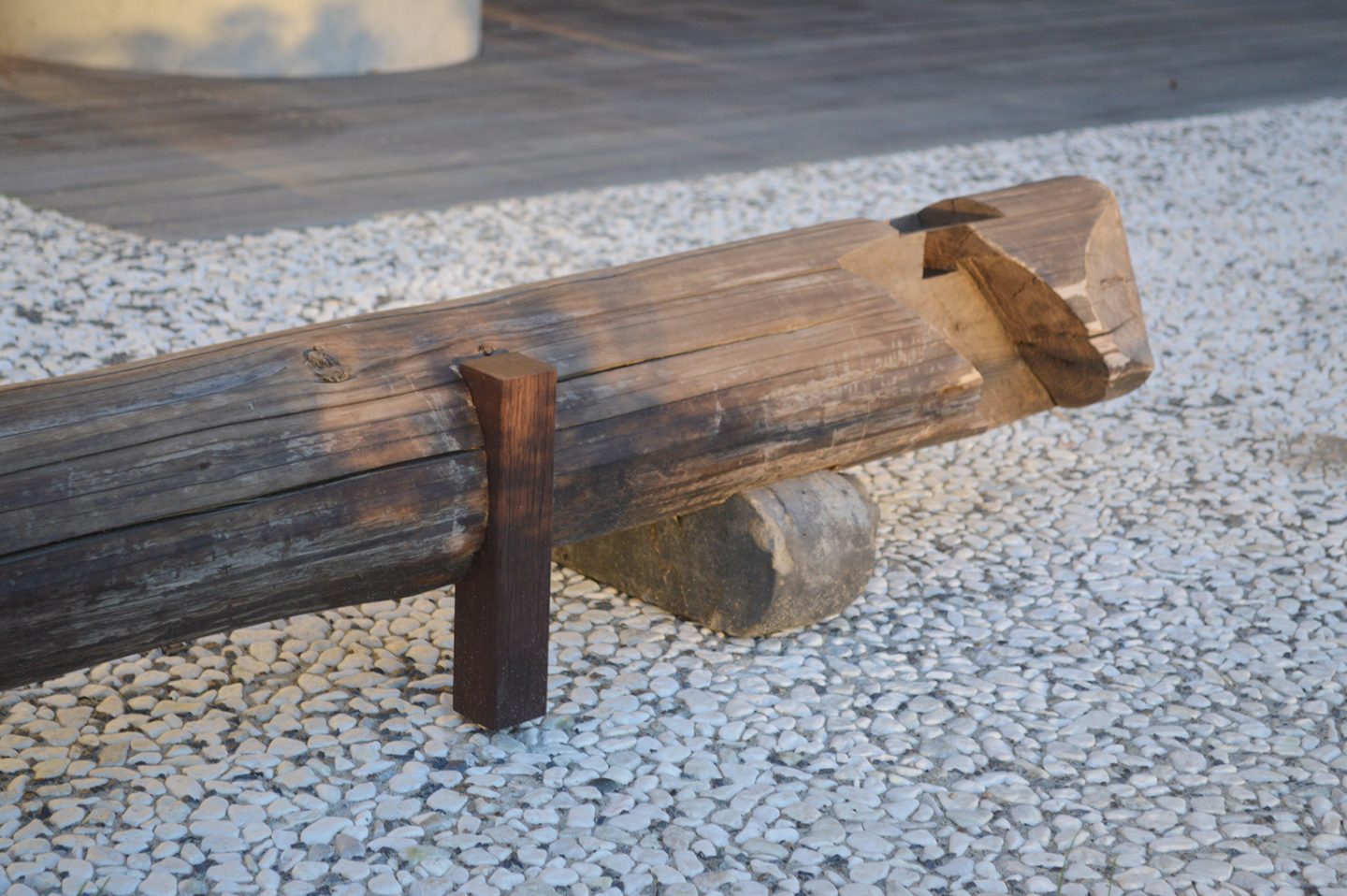
集まってきた嫁入り道具は、宮城県沖地震によって崩れ、長年庭の端に置かれていた秋保石であったり、3.11による津波で解体業者の元に集まった雄勝石や庭石だったり、ひとえに「石」といっても、多種多様な文脈からやってくる。形も色も不ぞろいで正直に言うと扱いづらいが、それぞれの嫁入り先からエピソードと一緒にもらい受け、それらを組み合わせ、工作のように設計を進めていった。
さまざまな事物が干渉し合える模様
細長い敷地に対して、長手方向に四つの性質を持ったエリアを千鳥状にずらしながら配置した。庭を歩くとパラパラマンガのようにシーンに出会う、経験の連続をつくる。
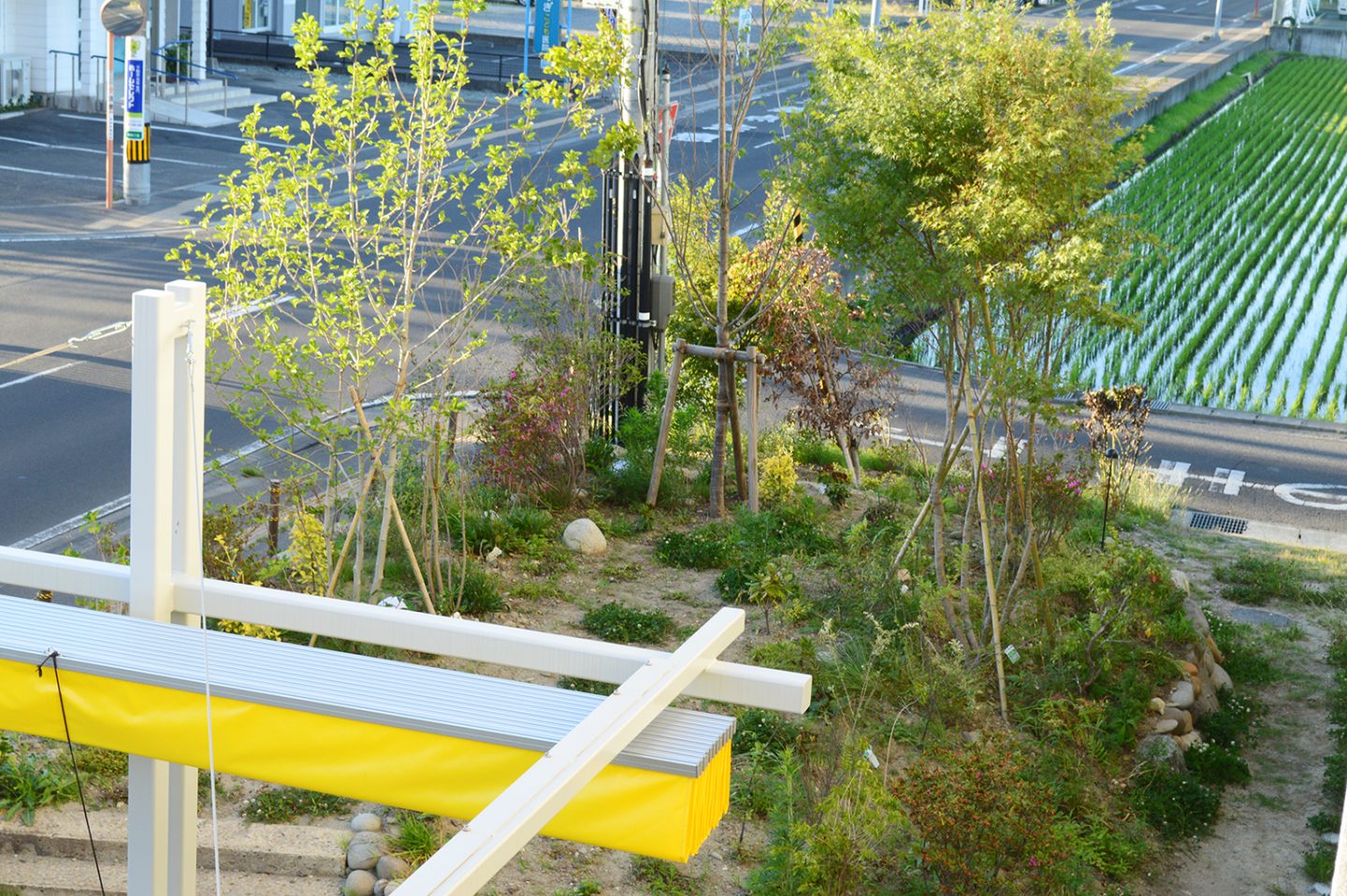
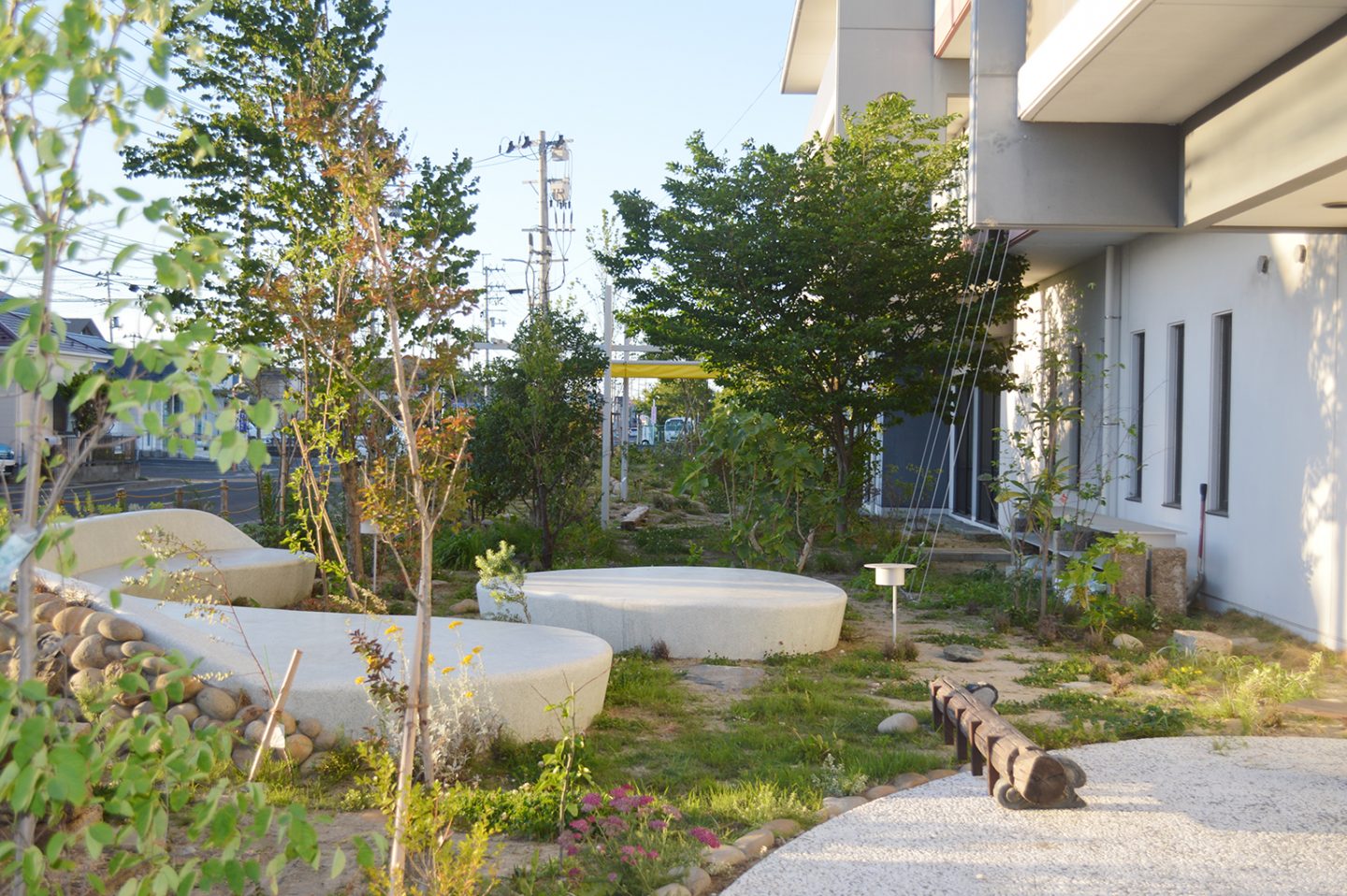
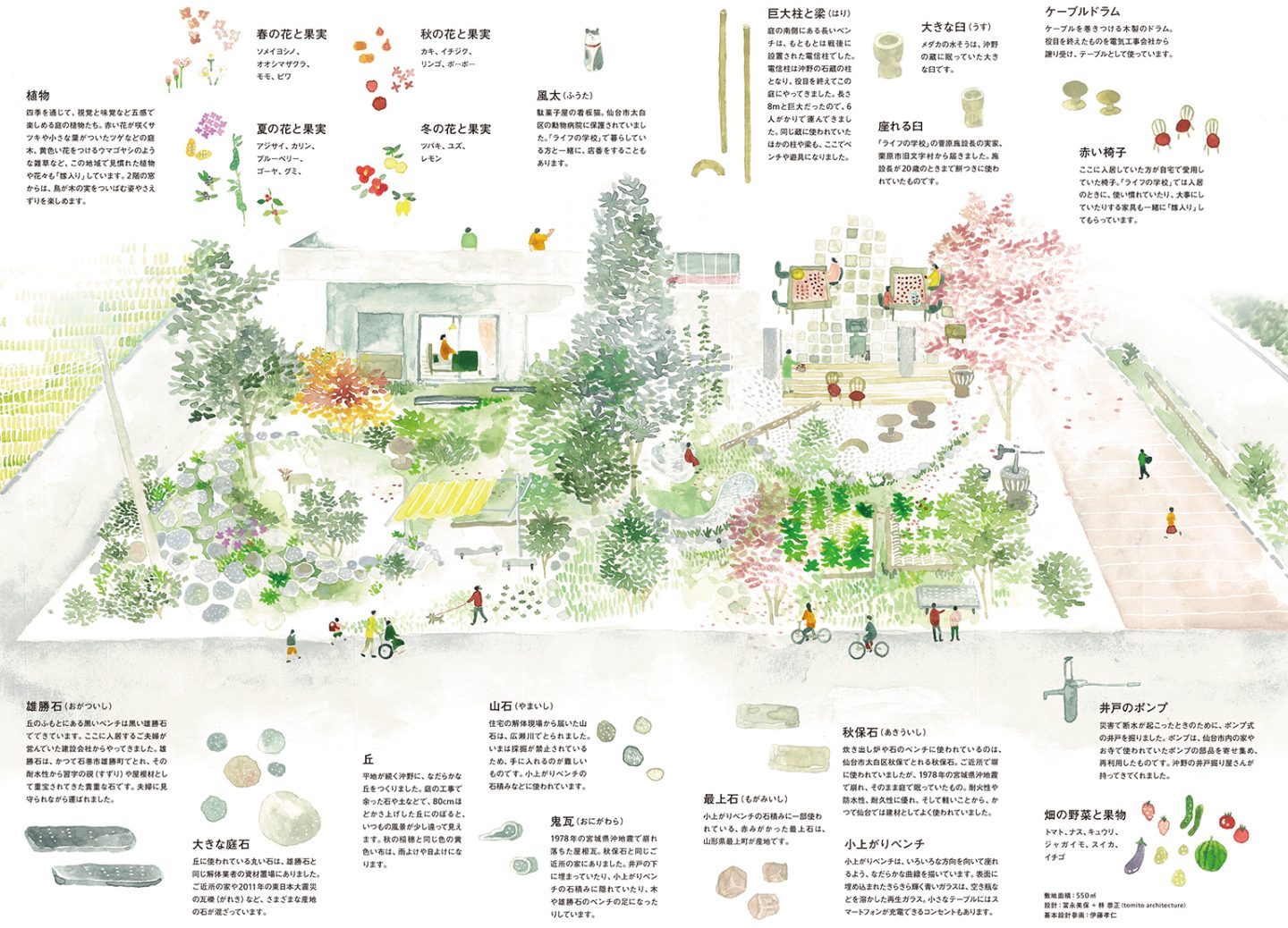
建物の床と同じ高さの縁側ステージと畑、石垣を背に持った小上がりベンチと果樹群、既存の植物や余った石が散らばった雑木林、田んぼを一望できる小高い丘。小さな川石から大きな木まで、スケールや素材の異なるものを「点-線-面」として模様に落とし込み、それらを重ねるように検討していくと、微細なレベルごとに生まれた模様が貼り絵のように折り重なる。強い全体性としての骨格を持つのではなく、さまざまな事物がそれぞれ自律しながら居合わせ、互いに干渉し合える模様としてのストラクチャーを目指した。
また、あえて庭の地面を舗装せず、自分で歩行できるお年寄りは家族や職員と手をつなぎながら、車椅子の人は一度街路に出てから庭を巡るように計画した。植物に関しても、整然と並ぶ常緑樹などの管理されたものではなく、季節の草花や落葉樹、果実などの手がかかるもの、踏まれて広がる芝など、動的な植物を選んだ。
関与する余白、仕事を生む庭
老人ホームに入居することには、我々の予想を大きく上回る不安があるだろう。家にいたころは育児や家事などの役割があったにもかかわらず、突如として、人からケアされる立場になる。完成された庭ではなく、入居者それぞれの個性やスキルが関与する余白をつくりたいと考えた。
毎週異なる曜日で通所しているおばあちゃん二人が、それぞれ畑のうねを自己流で更新し、形跡として残し合っている。元農家としての経験は、二人の畑の更新合戦へと展開し、ホーム入居者のおやつとなる果物や野菜につながって、犬の散歩中、または小学生たちの下校の風景と接続している。
芽吹いた植物たちは、水路に潜んでいた小さな蛙を呼び込み、ヤギによって整地される。小さな果実を付けた樹木目当てに鳥がやってきて、2、3階の老人ホームの居室の窓辺に季節の声を響かせる。計画や目標が先立つのではなく、異なる原理で生きているものたちがそれぞれ自由にふるまい、そうしてできていく風景に豊かさを感じる。さまざまなスキルを持った登場人物が、まるで屏風絵のように、庭を触媒として絡まり合っている。常に状態が揺れ動き、庭はいつまでも完成を迎えない。
この庭は、人やものの経験を手繰り寄せ、それらの形跡が集まり更新され続ける歴史のような場なのかもしれない。庭に嫁入りしてきたものは、ある人には思い出の何かでありながら、ある人には取るに足らないものだろう。しかし、それらは何かの形跡として環境に上書きされ、徐々に誰かの記憶として折り重なっていく。その一部や全体が、街の生態系や関係性に微振動を生み、連鎖のきっかけの一つとなる、寛容な庭で在り続けることを願っている。
This project renovates the front garden of Life no Gakkō, a welfare facility in Sendai that includes a special nursing home, transforming it into a park-like place that anyone can freely visit. By bringing in household items and materials from the neighborhood as “assets of the town,” as if they were bridal belongings, the project creates a garden that is never complete.
The Day the Garden Opened to the Town
A year and a half after beginning the garden’s design, it opened at the end of summer. Plants that had not yet sprouted in early spring had, by late summer, grown tall and lush.
The renewed terrace was imagined as a stage. One of the residents, a grandfather who once worked as a train conductor, shared stories from his past with everyone gathered there. Children who happened to pass by, staff members, and we as the designers all formed a circle to listen. Turning to the side, a goat that had arrived for the garden opening was single-mindedly eating grass. Weeding in the garden is carried out steadily by the facility’s director, joined by staff who noticed and helped. This work becomes part of an employment support program and even provides feed for the goat. A small ecosystem circulates through the garden. In these mutually dependent relationships, where multiple cycles overlap, we sensed the strength of a social sphere catalyzed by the garden.
Relocating the Town’s Gifts
When we first visited the site, hedges lined the property boundary in neat rows, creating a box-like garden that separated the facility from the surrounding town. We were asked by the client, Life no Gakkō, to design a garden that embodied their philosophy of living while richly sensing the rhythms of human life and death, and of recognizing each person’s individuality. This request became the starting point for the garden’s renovation.
The site, located in Okino, Wakabayashi Ward, Sendai, is now developed and densely built, but about thirty years ago it was largely farmland. The generation that built their dream homes thirty years ago has aged all at once, and many have moved into this facility at the edge of the neighborhood. Small voids have emerged in the residential area, with unattended gardens and vacant houses scattered throughout.
This project began with the idea that, together with the grandparents moving into the facility, their gardens and household items could also relocate, like bridal belongings. Drawing on the residents’ personal connections and the knowledge of local people, we went out into the town to document and gather its resources.
Embodying the Environment and Trusting Chance
Once construction began, we encountered a world without precise dimensions. Unlike architectural design, which often relies on millimeter-level precision, garden design emerges through repeated dialogue with a constantly shifting environment. We felt it was necessary for the designers themselves to touch the soil, decide where to place each stone, and confront the environment directly, considering everything at full scale. We therefore chose to stay on site while designing.
As we held meetings in the garden, moved trees, and stacked stones, passersby and residents of the facility would watch and later share their impressions. People walking their dogs early each morning wearing the same hat, children going to and from school, elderly women walking slowly. Experiencing the daily rhythms flowing through the site, time passed as we gradually became part of the environment ourselves.
The “bridal belongings” that gathered included Akiu stone that had collapsed during the Miyagi–Oki Earthquake and sat at the edge of a garden for many years, as well as Ogatsu stone and garden stones collected by demolition companies after the 2011 tsunami. Though all could be called a kind of “stone,” they arrived from many different contexts. Their shapes and colors were uneven and, honestly, difficult to handle, but each was received together with its story from its former home. By combining them, we advanced the design as if assembling a craft.
A Pattern Where Many Things Can Interfere
On the long, narrow site, four areas with distinct characteristics were arranged in a staggered sequence along its length. Walking through the garden creates a continuous experience, like encountering scenes in a flipbook.
These include an engawa-like stage at the same height as the building floor with a vegetable garden, a small raised bench backed by a stone wall and fruit trees, a thicket scattered with existing plants and leftover stones, and a small hill offering a view of the rice fields. From small river stones to large trees, elements of different scales and materials were translated into patterns of points, lines, and surfaces. As these layers were overlapped, patterns at multiple levels accumulated like a collage. Rather than forming a strong, unified structure, the garden aims to be a structure where many elements coexist autonomously and are able to interact with one another.
The ground of the garden was intentionally left unpaved. Elderly residents who can walk do so hand in hand with family or staff, while wheelchair users enter the garden after briefly moving out to the street. The planting avoids orderly rows of evergreen trees and instead favors seasonal flowers, deciduous trees, fruit-bearing plants, and grasses that spread when stepped on, selecting vegetation that remains dynamic.
A Garden That Creates Space for Involvement and Work
Moving into a nursing home likely involves anxieties far greater than we might imagine. People who once had roles through childcare or housework suddenly find themselves in a position of being cared for. Rather than a finished garden, we sought to create space for involvement, where each resident’s individuality and skills could play a role.
Two grandmothers who attend on different days each update the vegetable beds in their own ways, leaving traces of their work. Their experience as former farmers turns into a friendly competition of cultivation, producing fruits and vegetables that become snacks for residents and connect to scenes of dog walks and children returning home from school.
Sprouting plants invite small frogs hiding in the waterways, and goats help maintain the ground. Birds arrive for the fruit on the trees, bringing seasonal sounds to the windows of the second and third floors of the nursing home. Rather than prioritizing plans or goals, richness is found in the landscapes that emerge as beings governed by different principles act freely. People with diverse skills intertwine, like figures in a folding-screen painting, with the garden as their catalyst. The garden remains in constant flux and never reaches completion.
This garden may be a place like a living history, where the experiences of people and objects are drawn in, gathered, and continually renewed. What arrives in the garden as a bridal belonging may be a cherished memory for one person and insignificant to another. Yet these traces are overwritten into the environment and gradually accumulate as shared memory. We hope this garden will continue to be a generous place, creating subtle vibrations within the town’s ecosystem and relationships, becoming one of the catalysts for new chains of interaction.
- 嫁入りの庭
-
HPhttps://www.facebook.com/lifenogakkou
- 設計
-
統括意匠|Design Direction冨永美保・林恭正/tomito architecture
Miho Tominaga, Yasumasa Hayashi / Tomito Architecture -
構造|Structure鈴木芳典・鶴田翔/TECTONICA
Yoshinori Suzuki, Sho Tsuruta / TECTONICA
- 工事|Construction
-
監理|Supervision冨永美保・林恭正/tomito architecture
Miho Tominaga, Yasumasa Hayashi / Tomito Architecture -
施工|Construction株式会社アトリエアムニー
Atelier Amni Co., Ltd. -
施工協力|Construction Assistance林恭正/tomito architecture
Yasumasa Hayashi / Tomito Architecture - 概要|Overview
-
所在地|Location宮城県仙台市
Sendai City, Miyagi Prefecture, Japan -
主な用途|Primary Use町の資源を引き受ける庭
A Garden That Receives the Town’s Shared Gifts - 掲載
-
社会福祉法人「ライフの学校」HPよりhttps://gakkou.life/about/
-
庭の嫁入り日記(スタッフ林の常駐日記)https://haginokaze-tomito-hayashi.tumblr.com/