



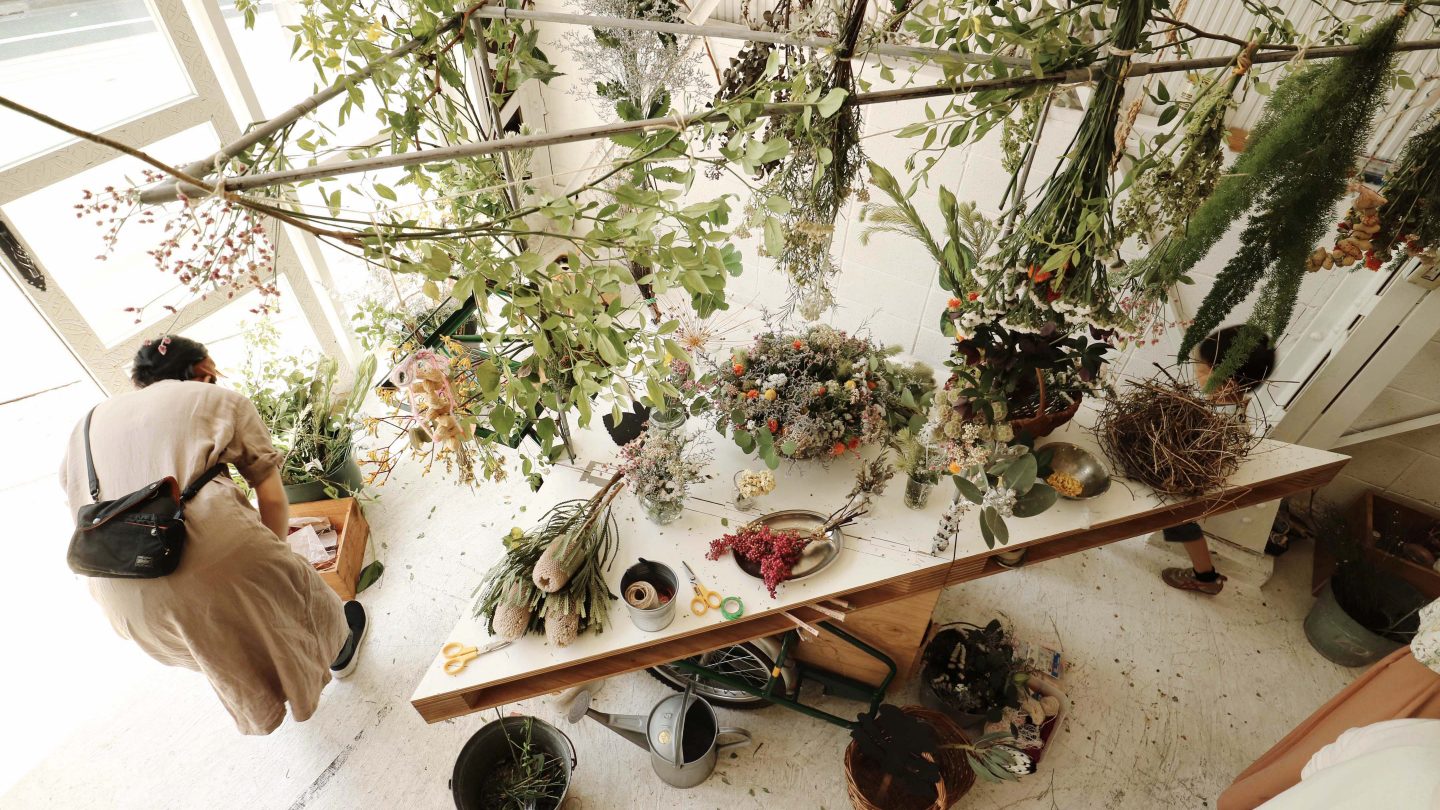
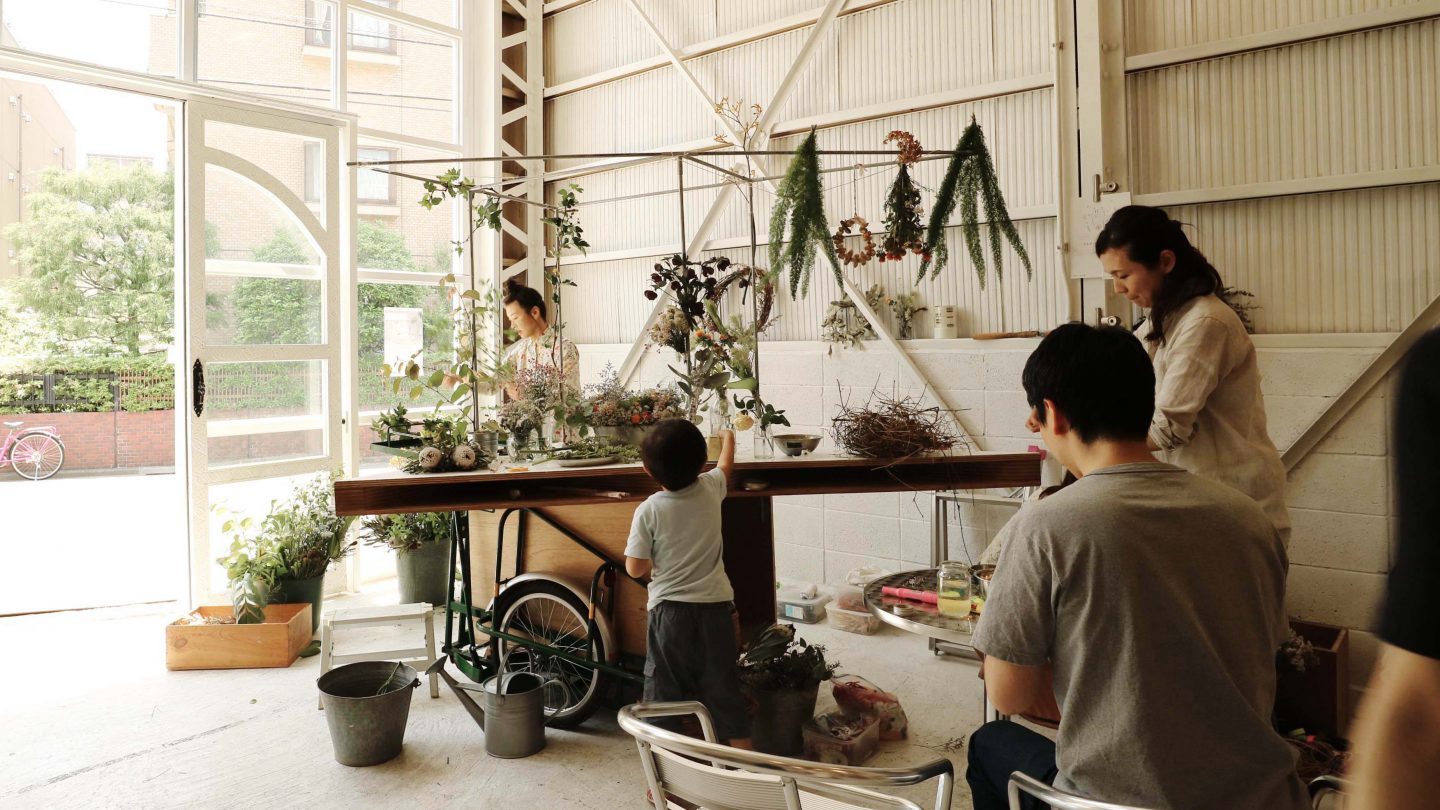
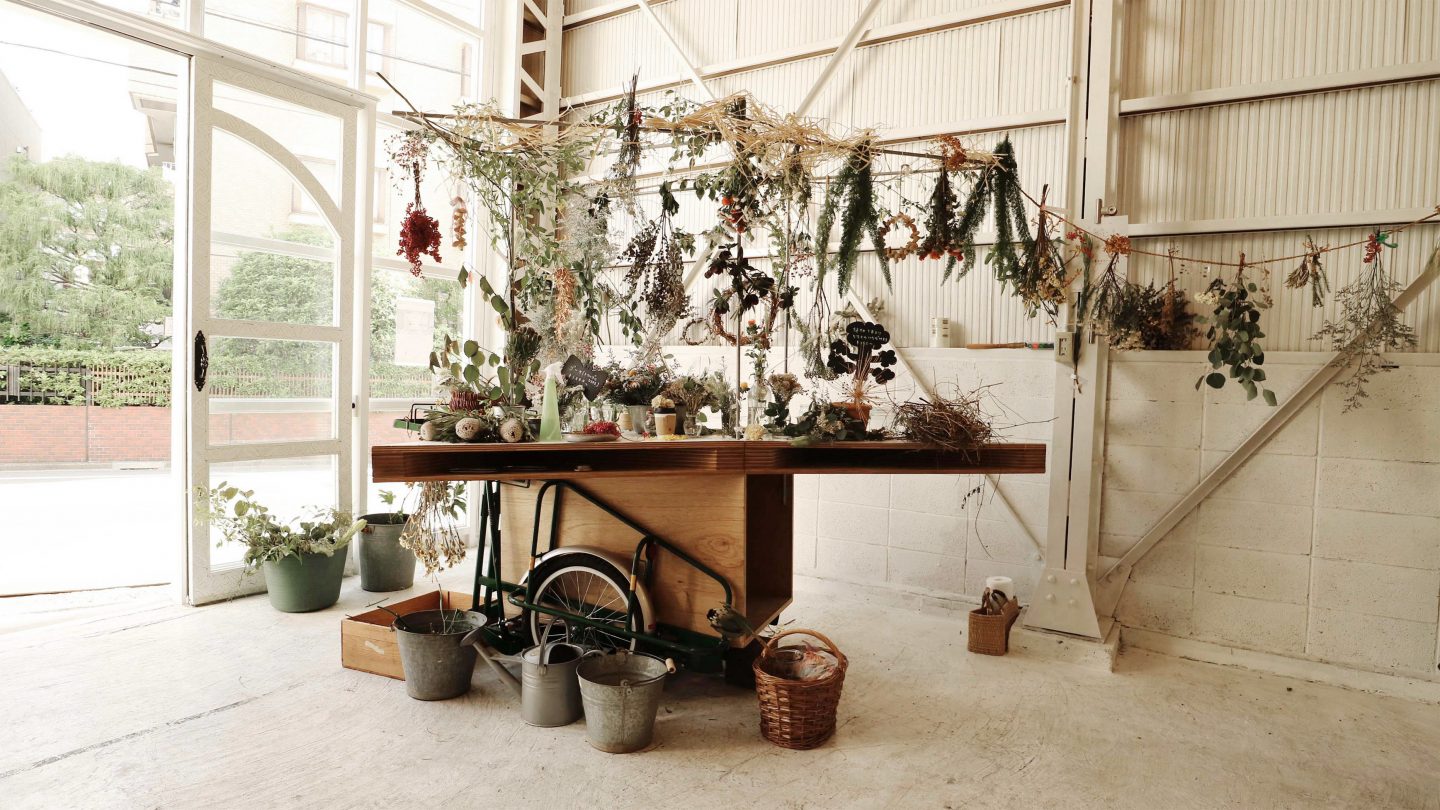
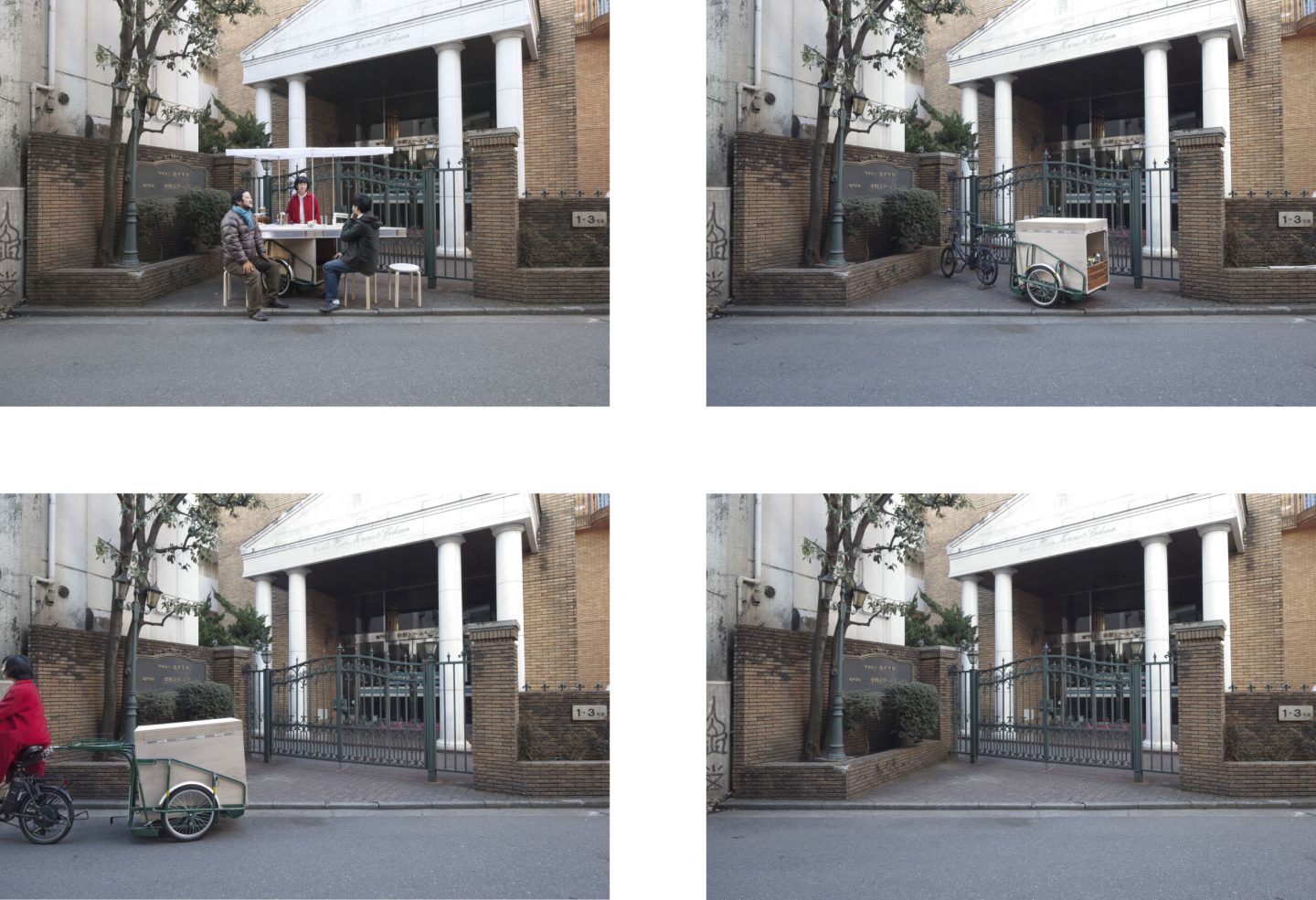
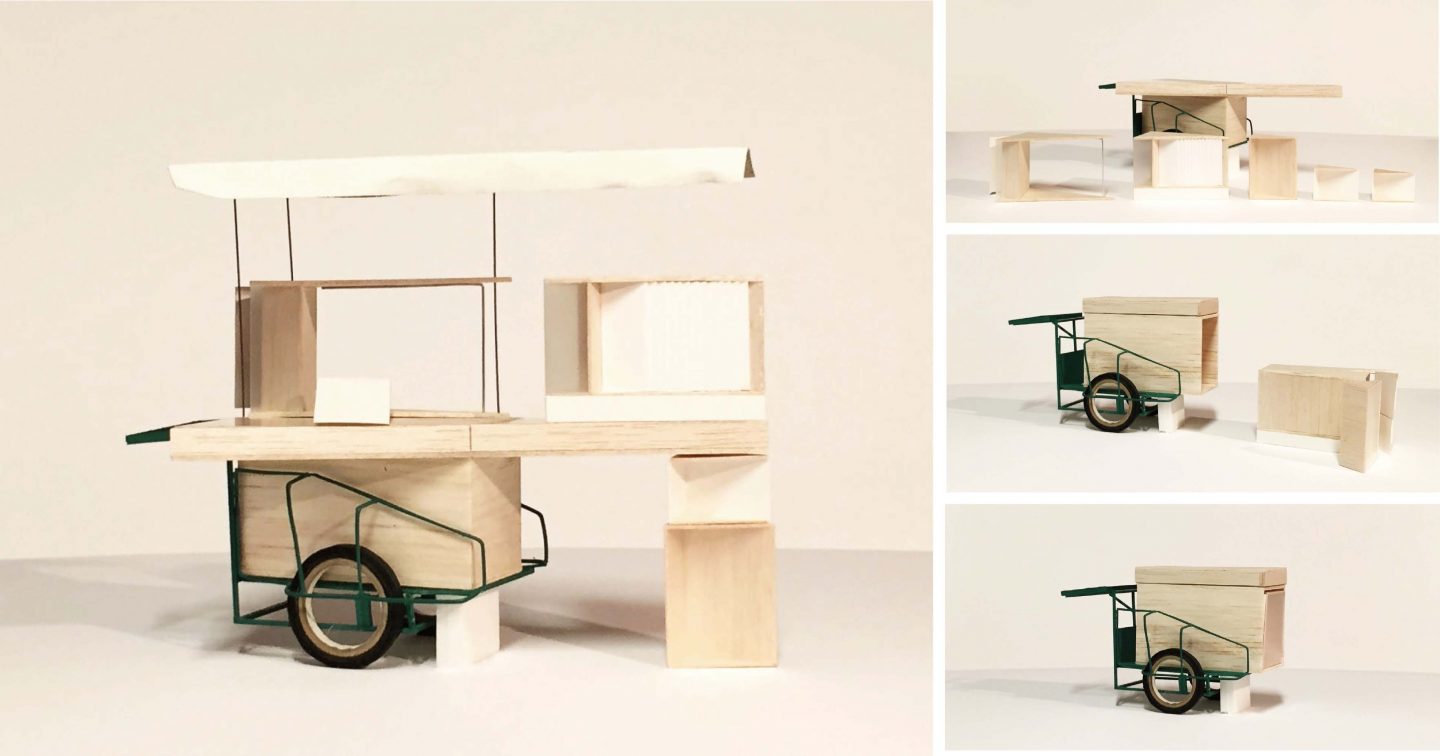
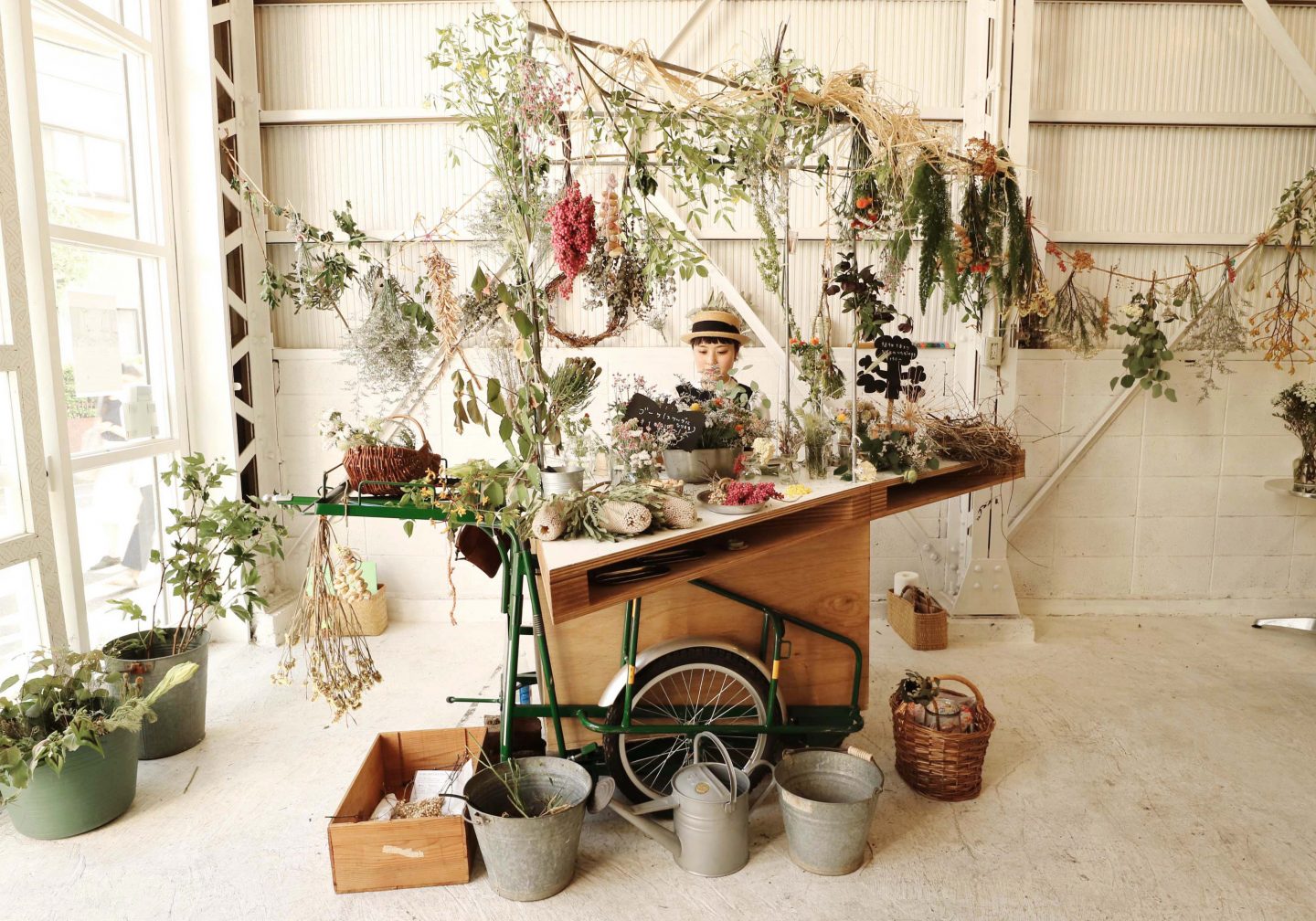
吉祥寺の線路に沿って点在する、三角形の不整形敷地を舞台とした、町なかを移動する三角形の屋台です。なぜ三角形の形をしているのかについて、ご説明します。
吉祥寺には、同じ角度の鋭角をもった土地(通称ヘタ地)が数多く点在しています。
農道を起源とする都市骨格と、東西にまっすぐのびる中央線が衝突し、2つの角度が重なったためです。線路沿いには、200近くのヘタ地がありますが、形の中途半端さから、その多くは自転車置き場や自動販売機、味気のない植栽が置かれたデッドスペースとなっています。(伊藤孝仁の卒業論文より引用)
「さんかく屋台」は、このヘタ地と同じ角度をもった屋台です。ヘタ地にピタッとはまります。
In Kichijoji, there are many scattered plots of land with the same leftover sharp triangular angle, commonly known as “heta-chi.”
This condition arose from the collision between an urban framework originating in former farm roads and the Chuo Line, which runs straight east to west, resulting in the overlap of two differing angles. Along the railway line alone, there are nearly 200 such heta-chi, but because of their awkward shapes, many have become dead spaces occupied by bicycle parking, vending machines, or unremarkable planting. (Quoted from Takahito Ito’s graduation thesis).
“Sankaku Yatai” (Triangle Food Stall) is a food stall that shares the same angle as these heta-chi. It fits perfectly into them.
- 概要|Overview
-
主要用途|Primary Use町をめぐる移動型ショップ
A Mobile Shop That Moves Through the Town -
設計・製作|Design and Fabrication冨永美保・伊藤孝仁/tomito architecture
Miho Tominaga, Takahito Ito / tomito architecture