






福祉×地域の交差点|An intersection between welfare and community.
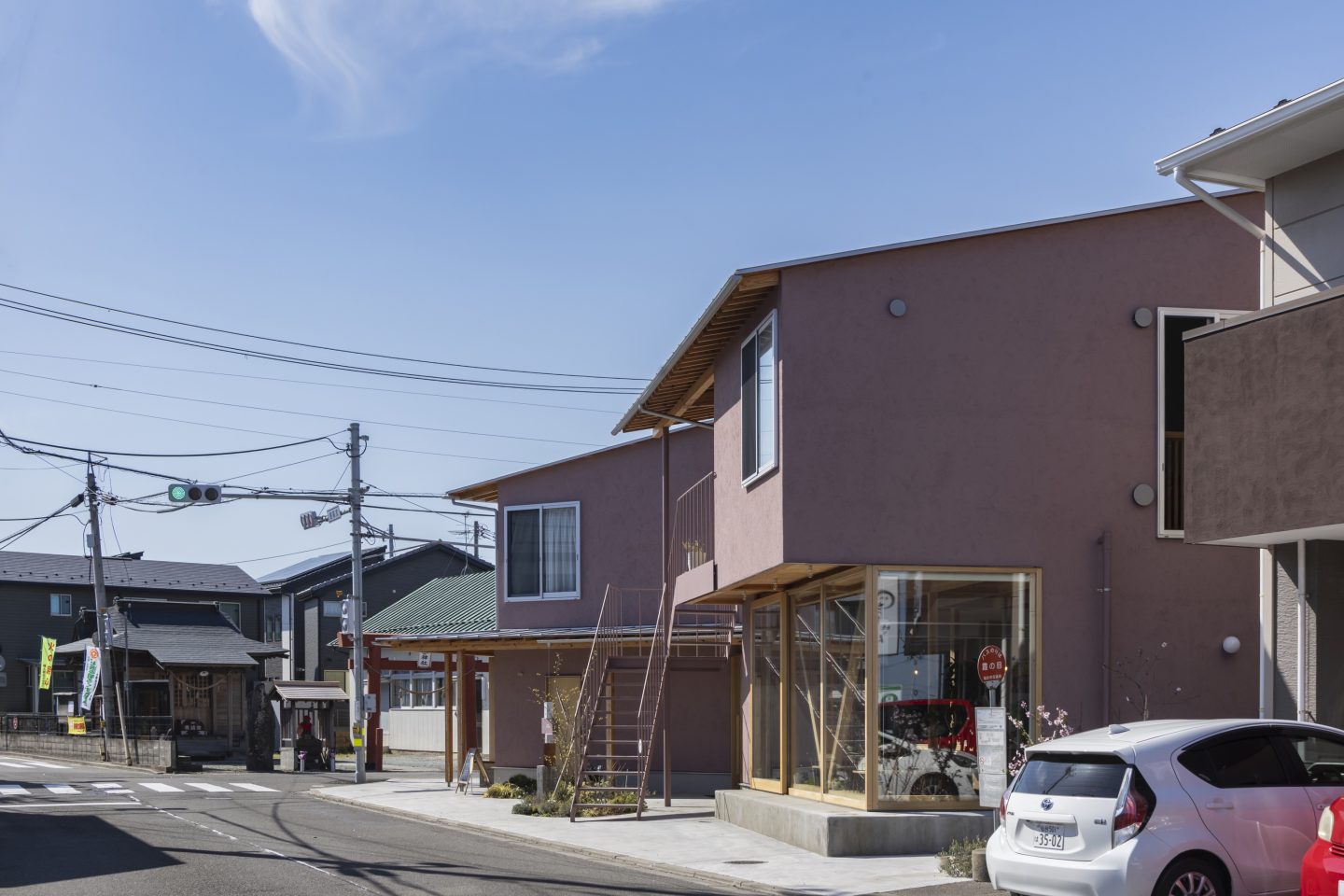
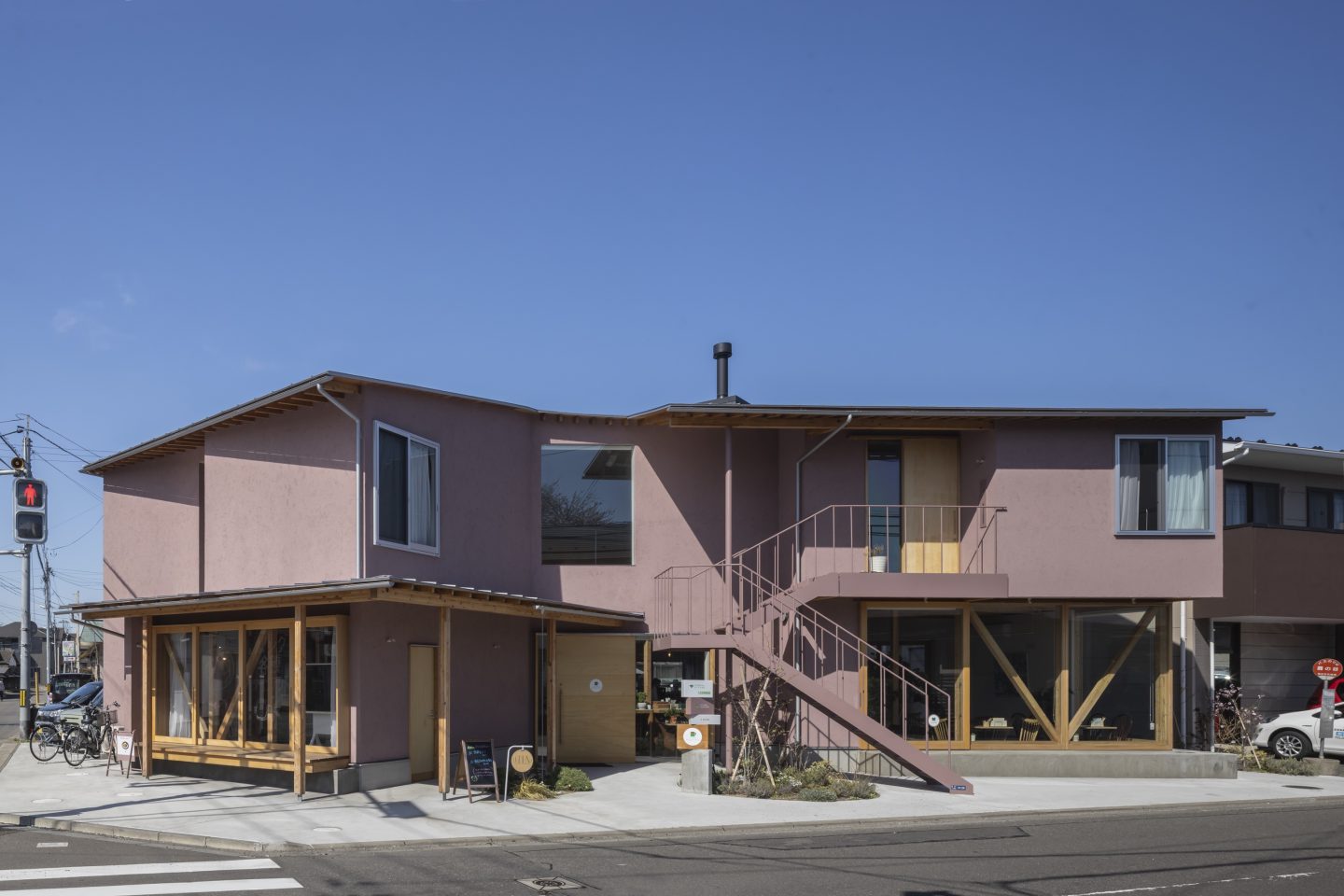
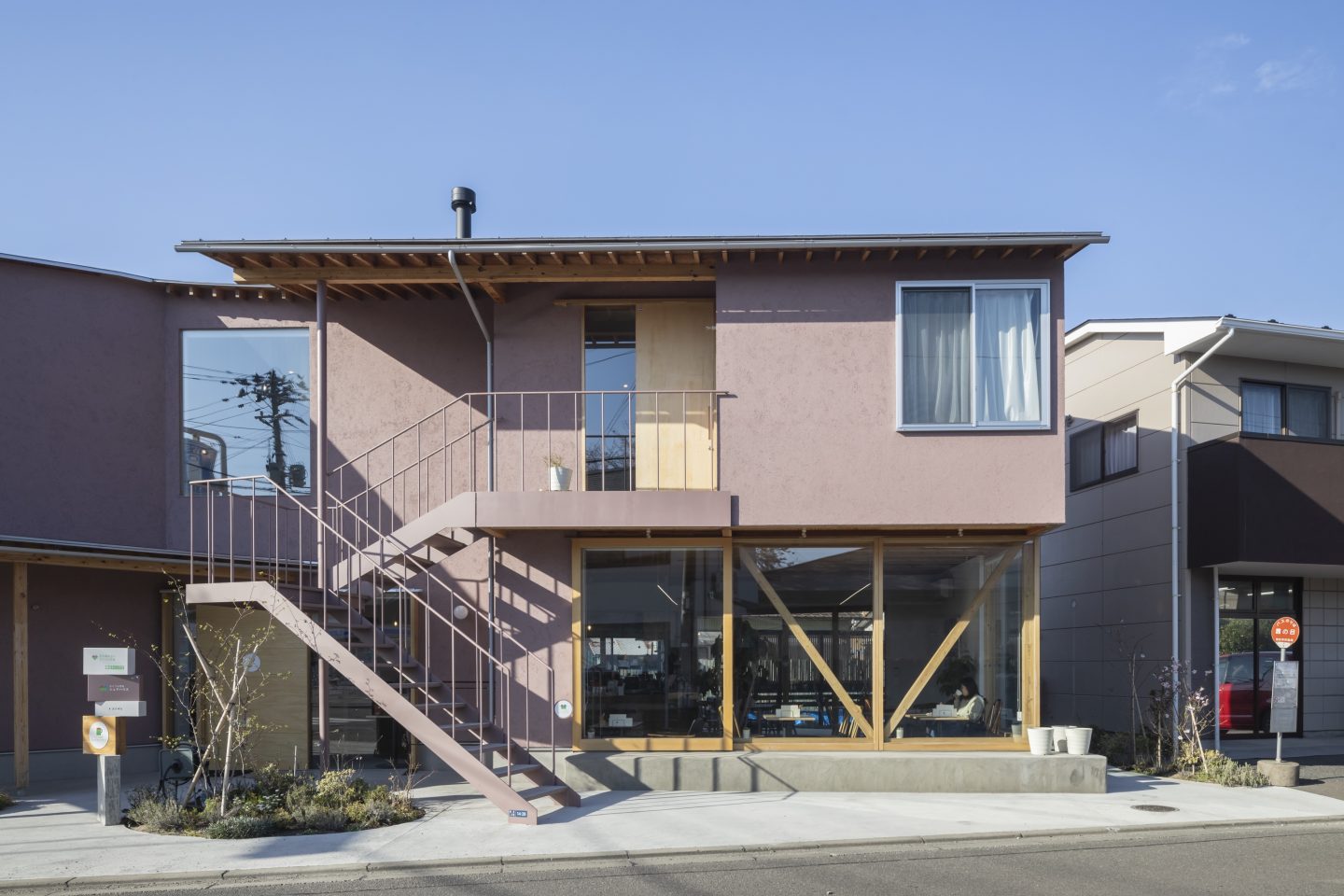
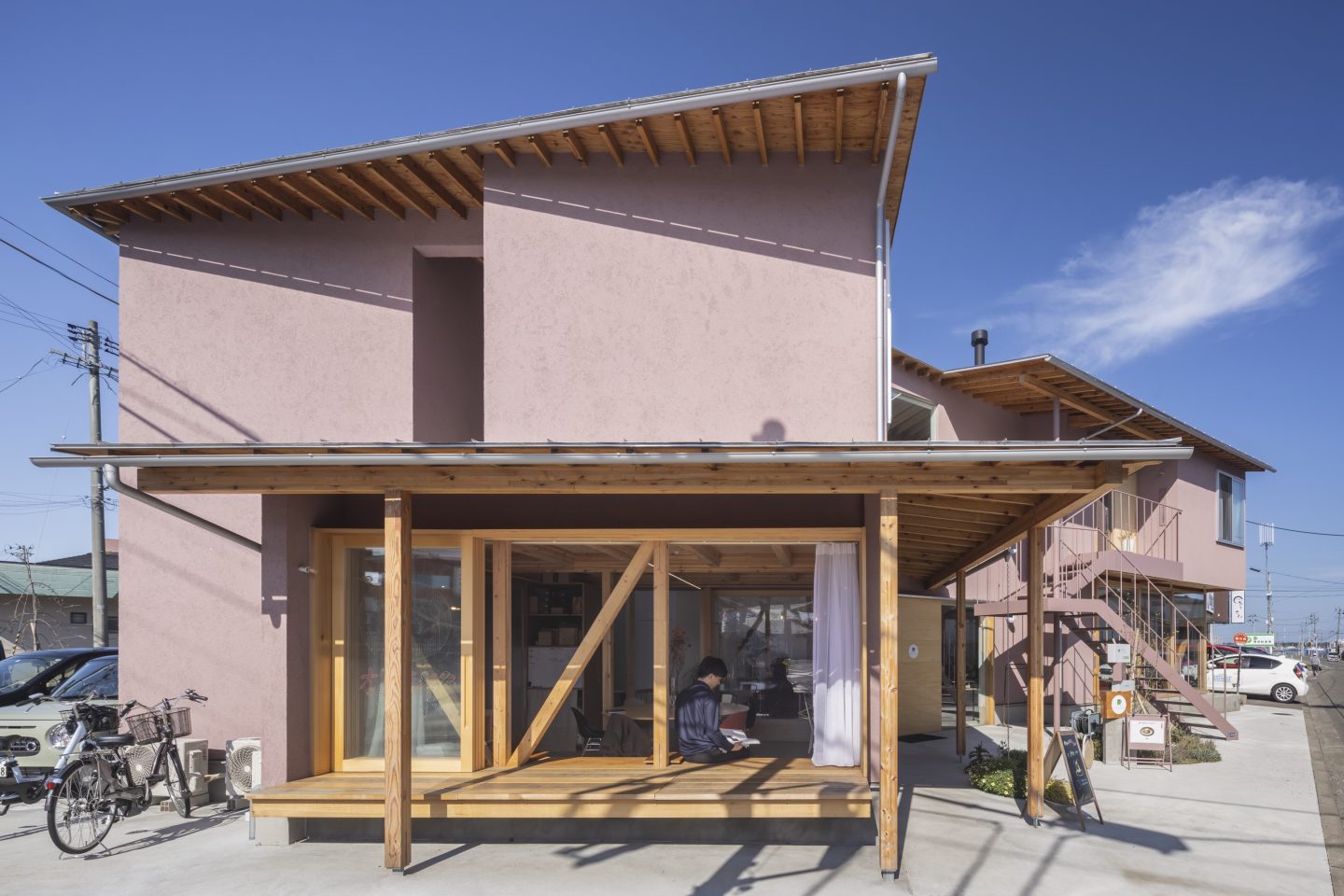
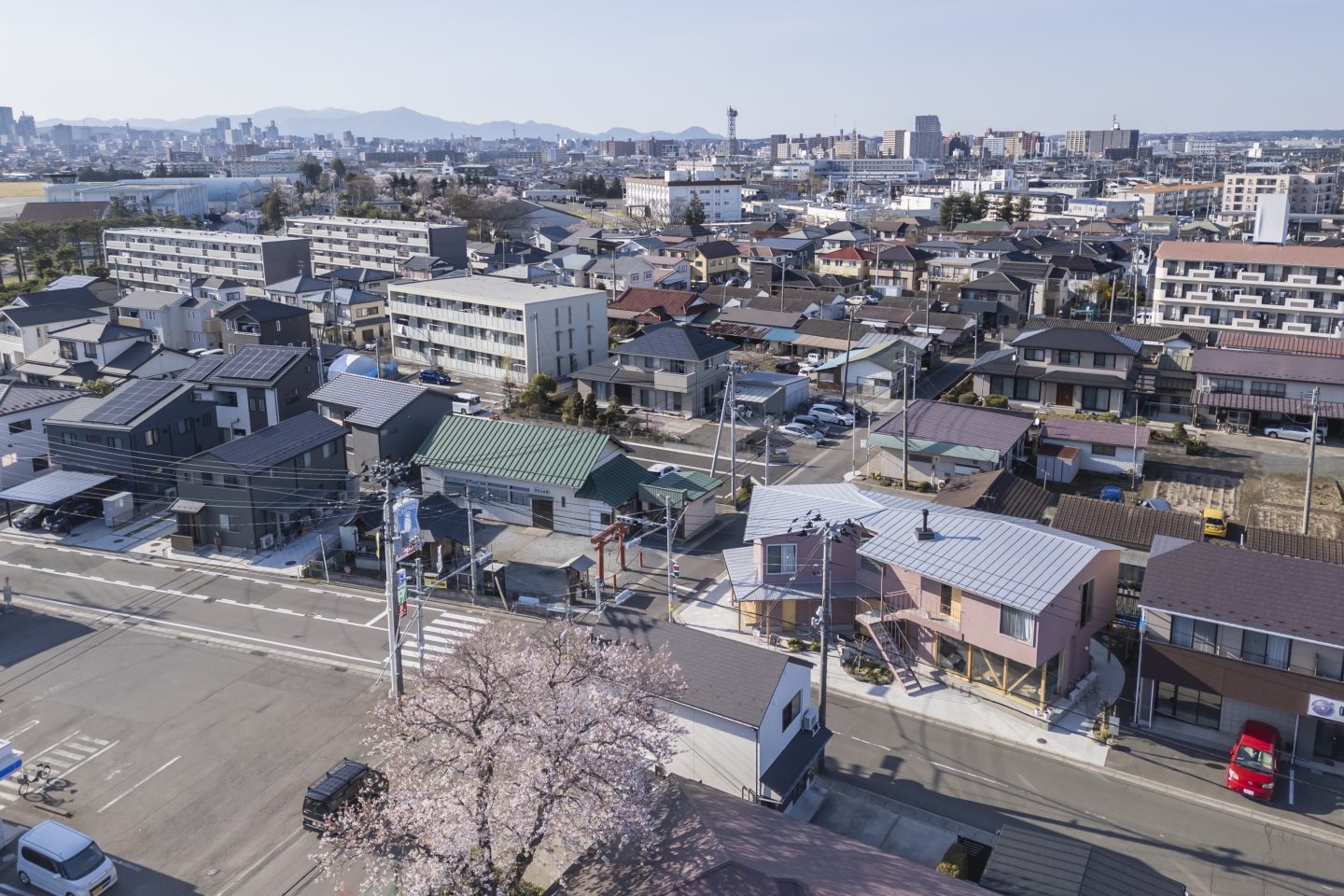
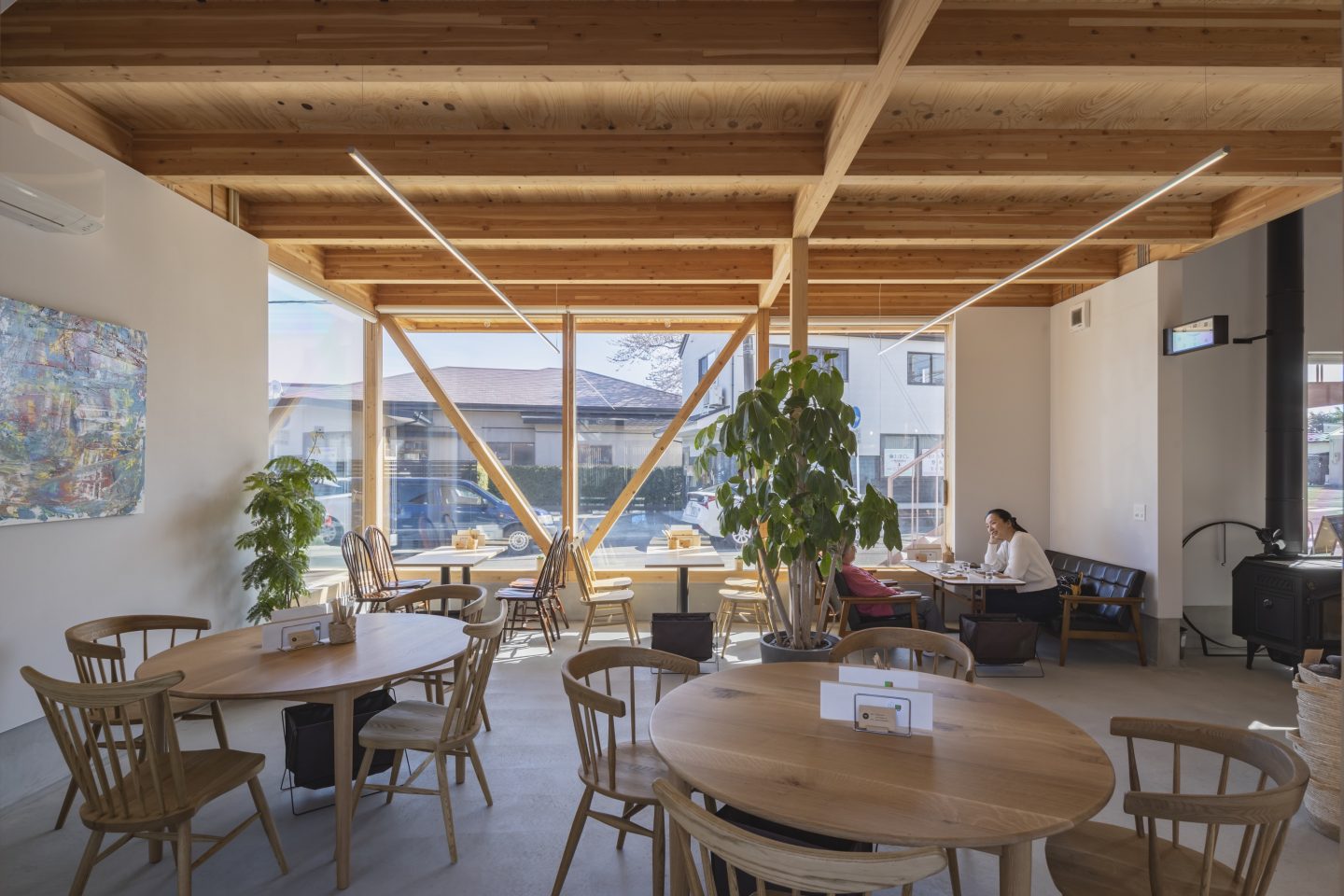
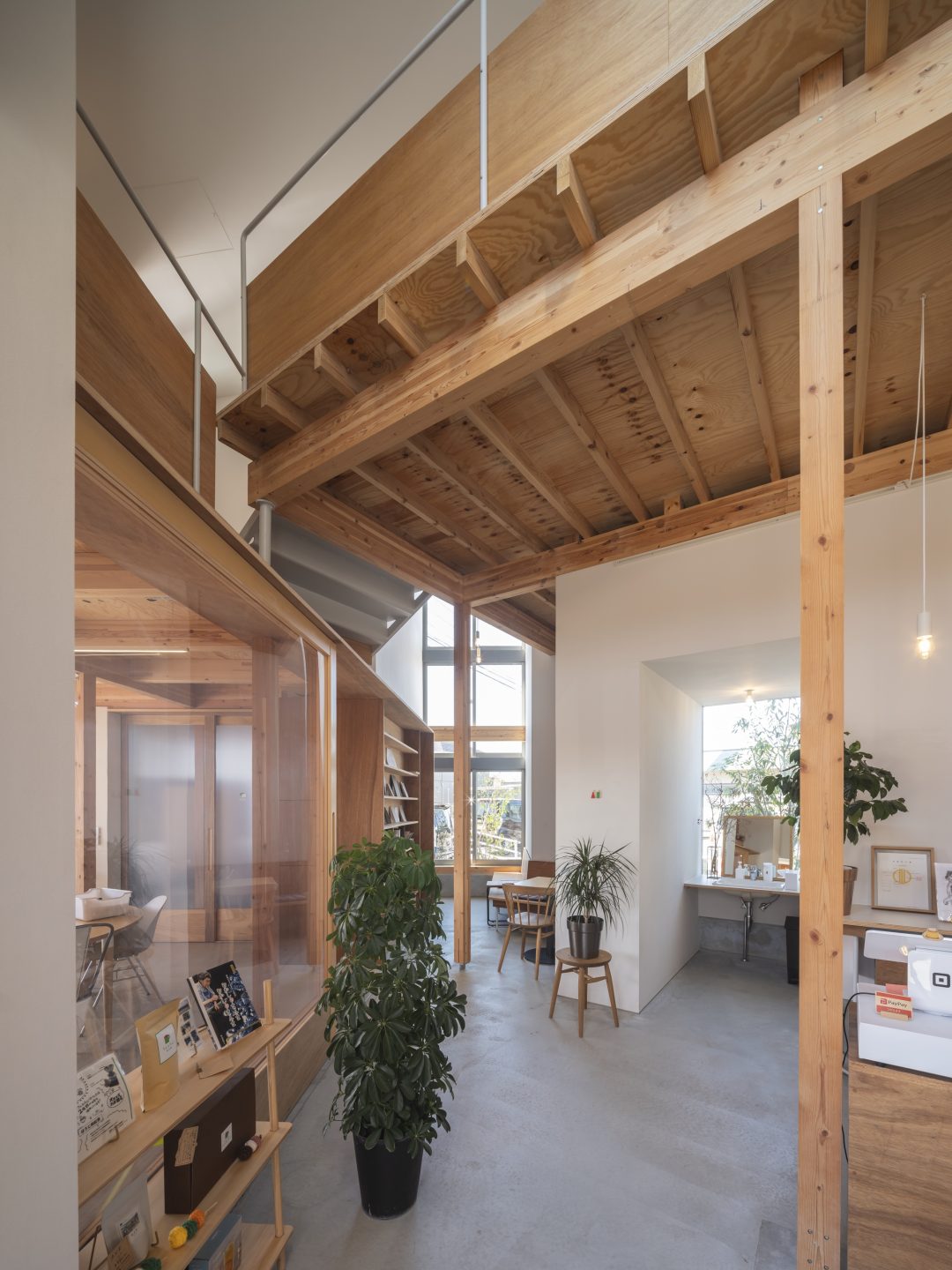
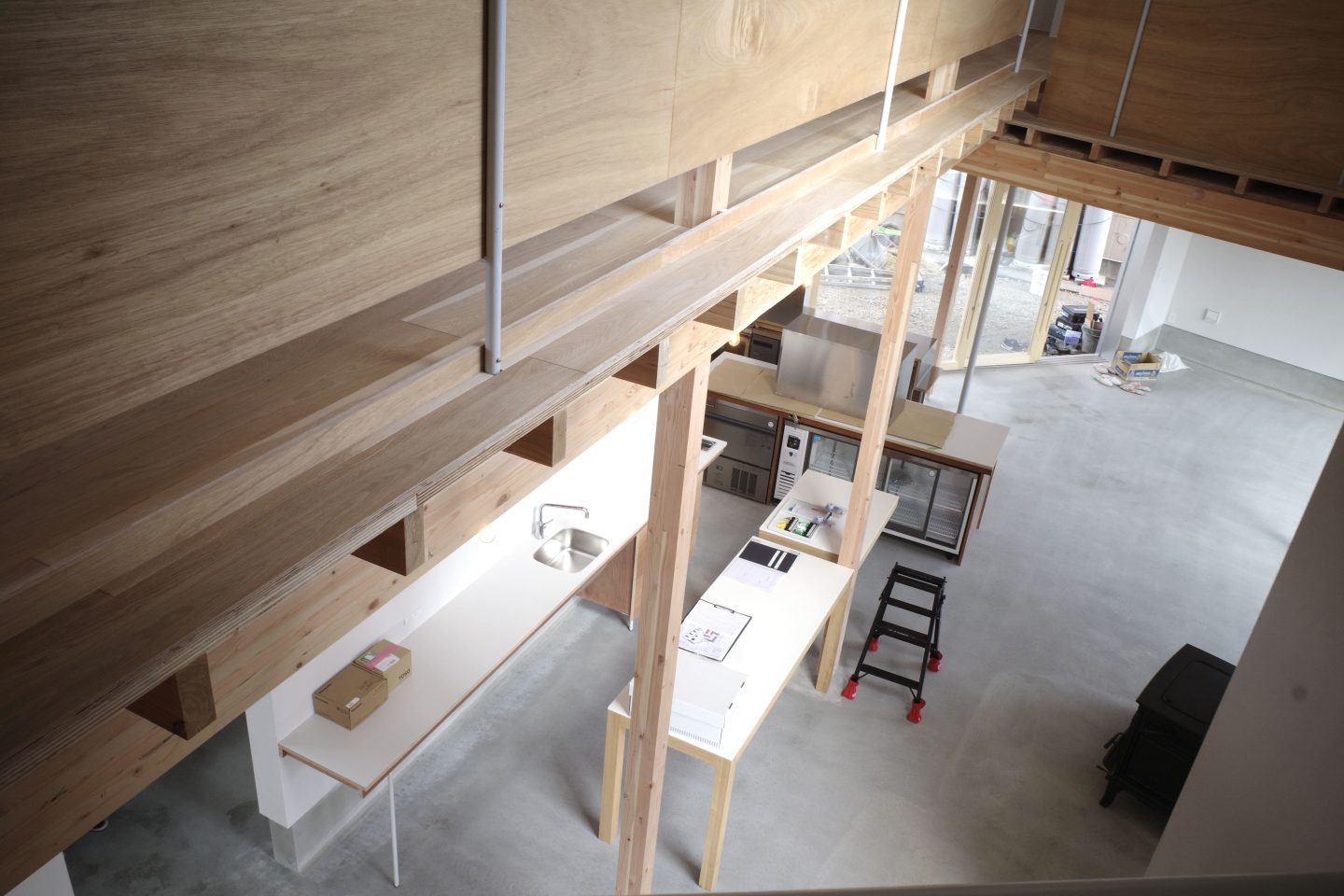
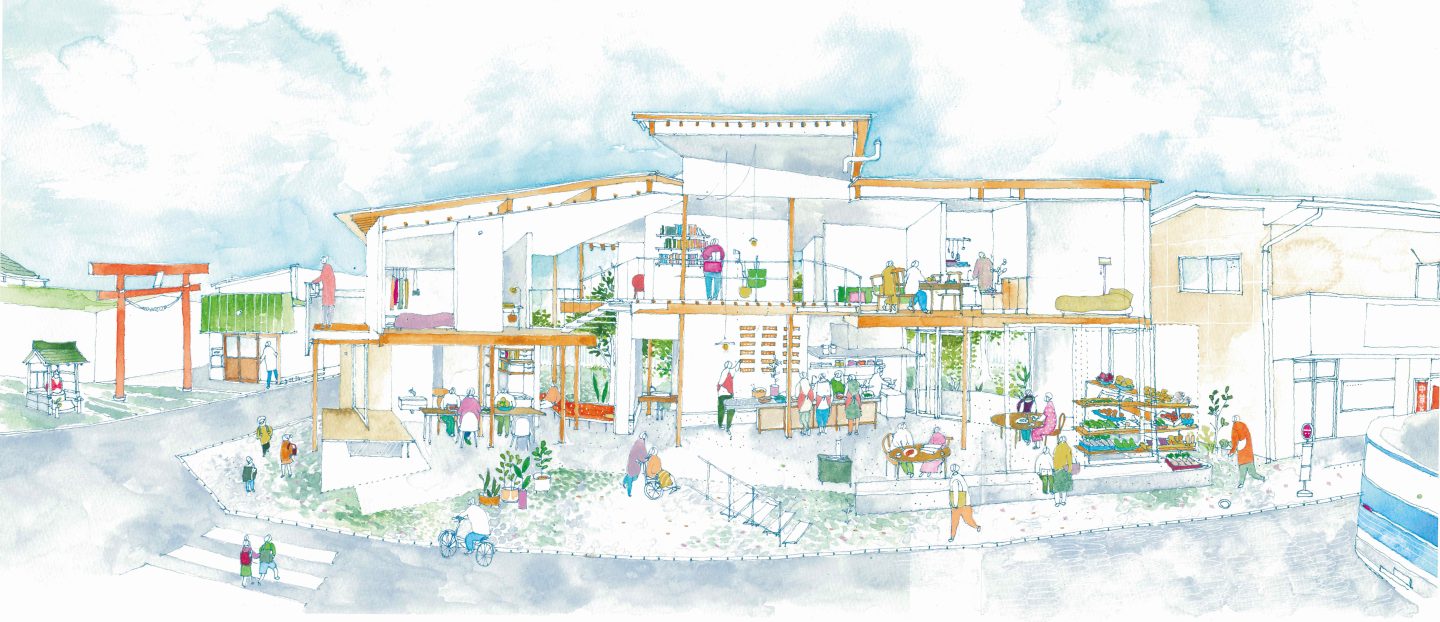
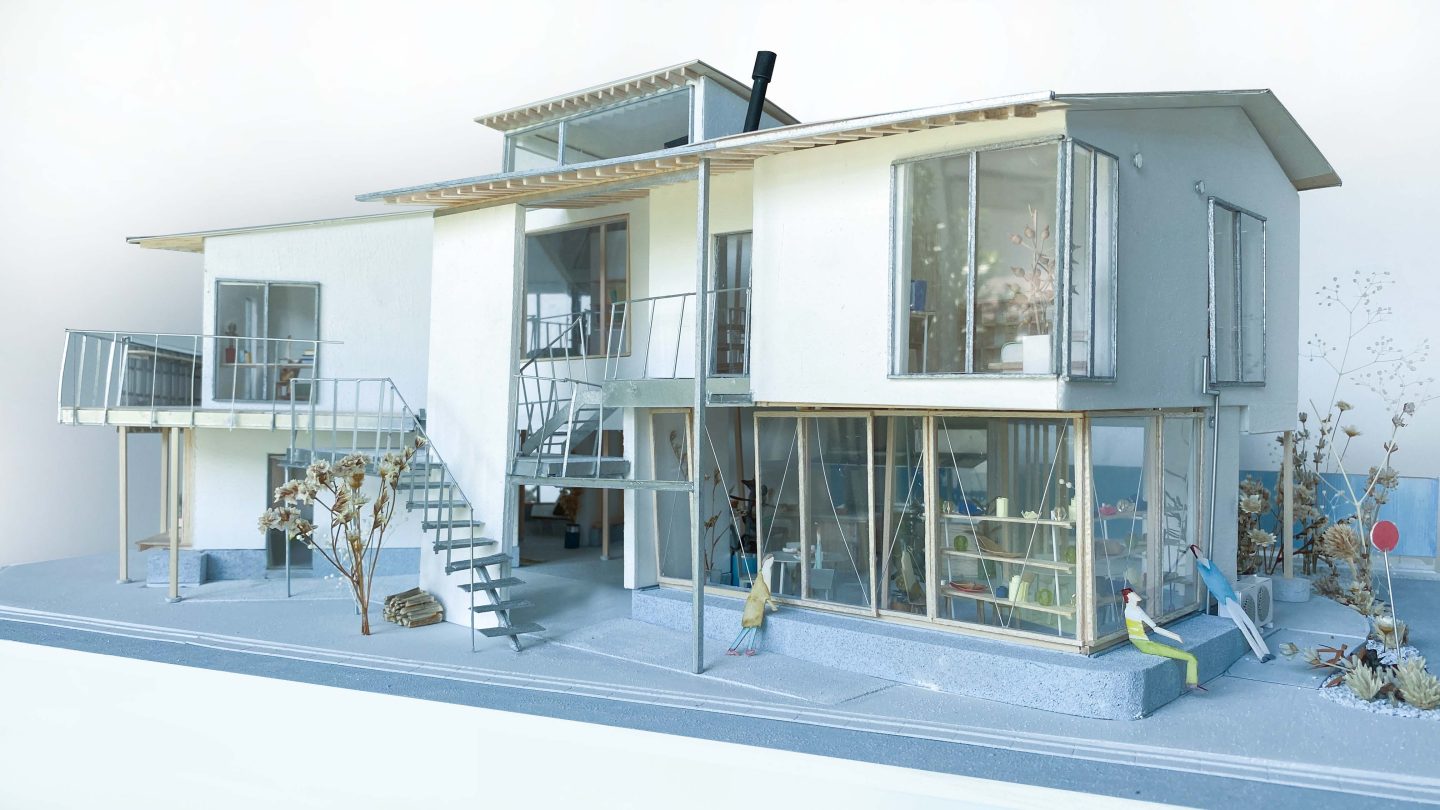
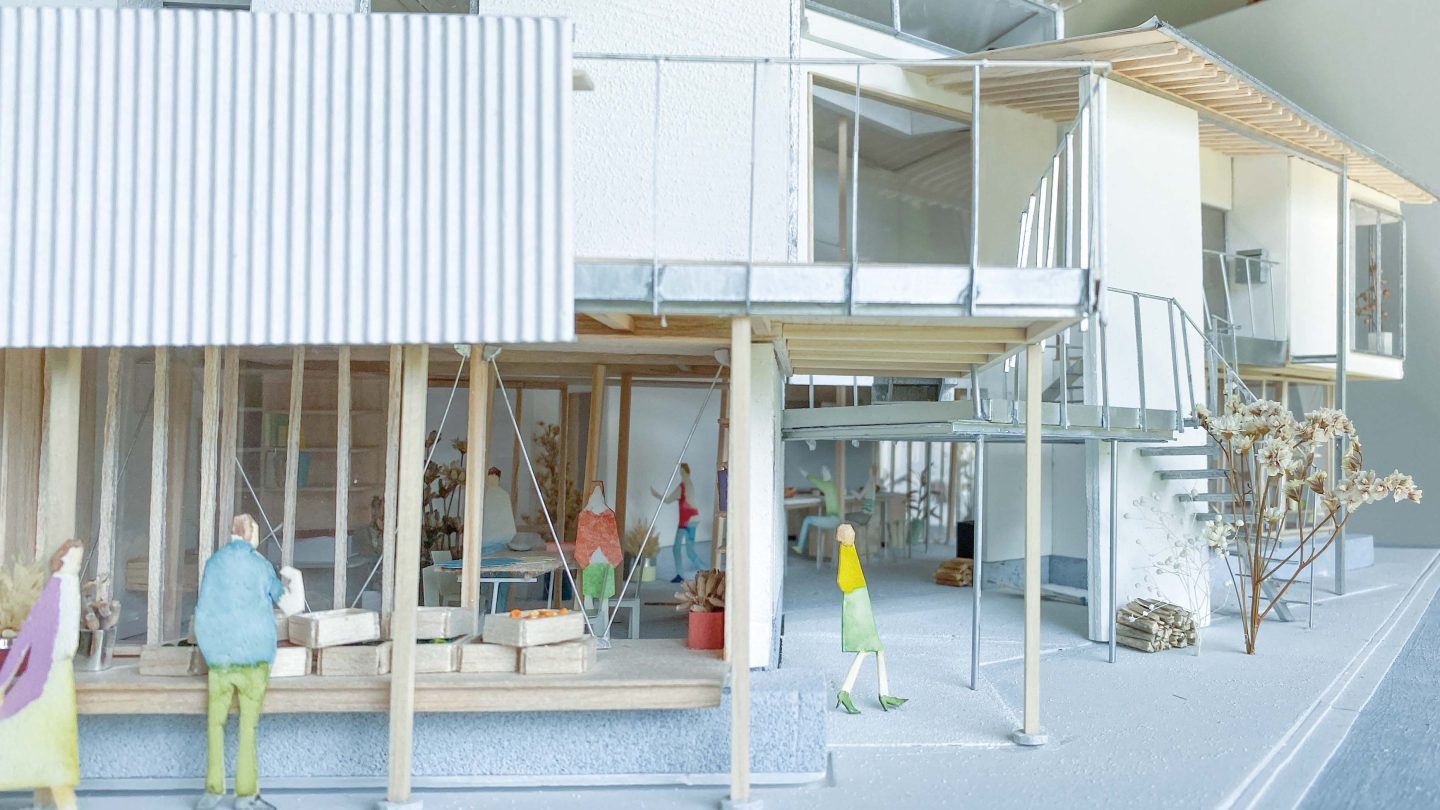
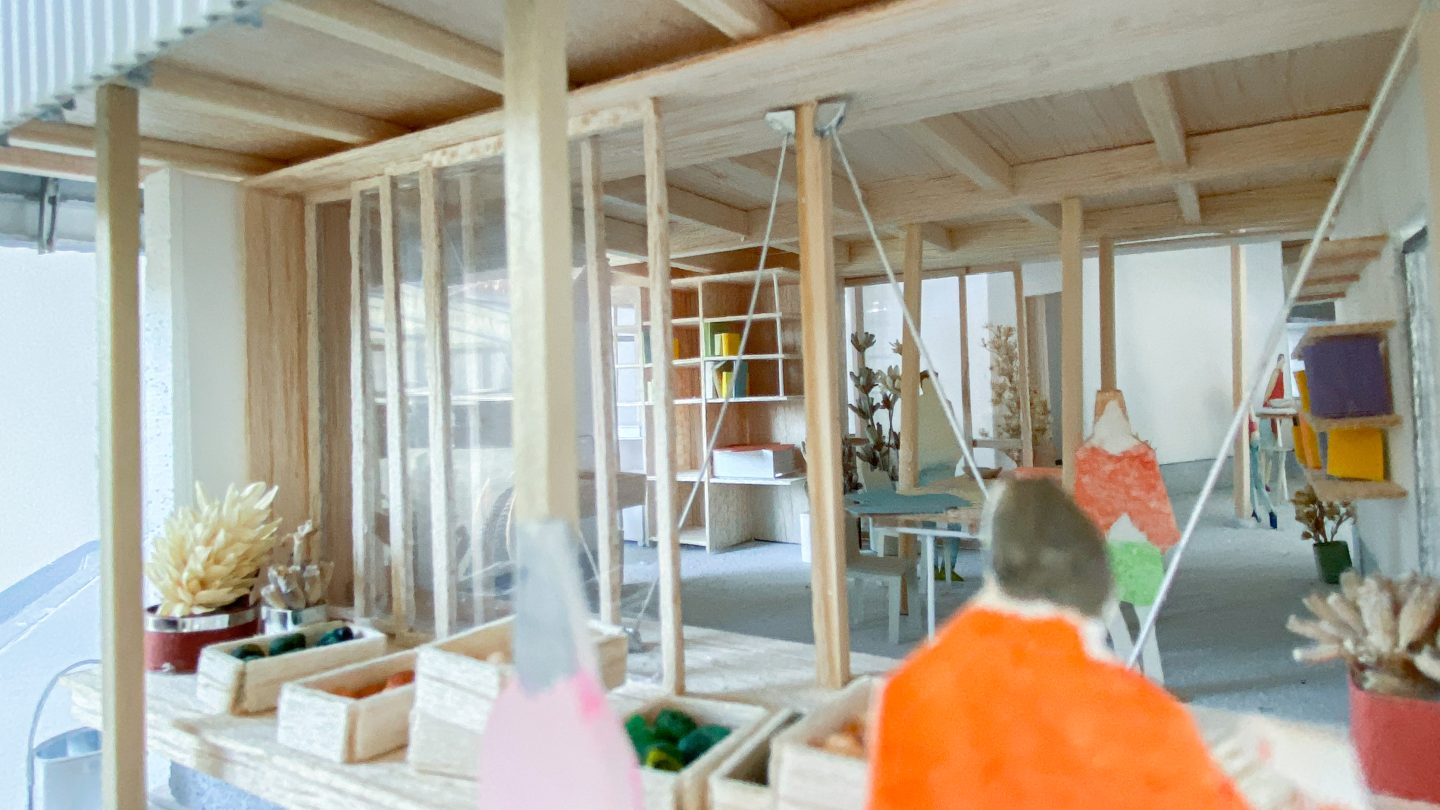
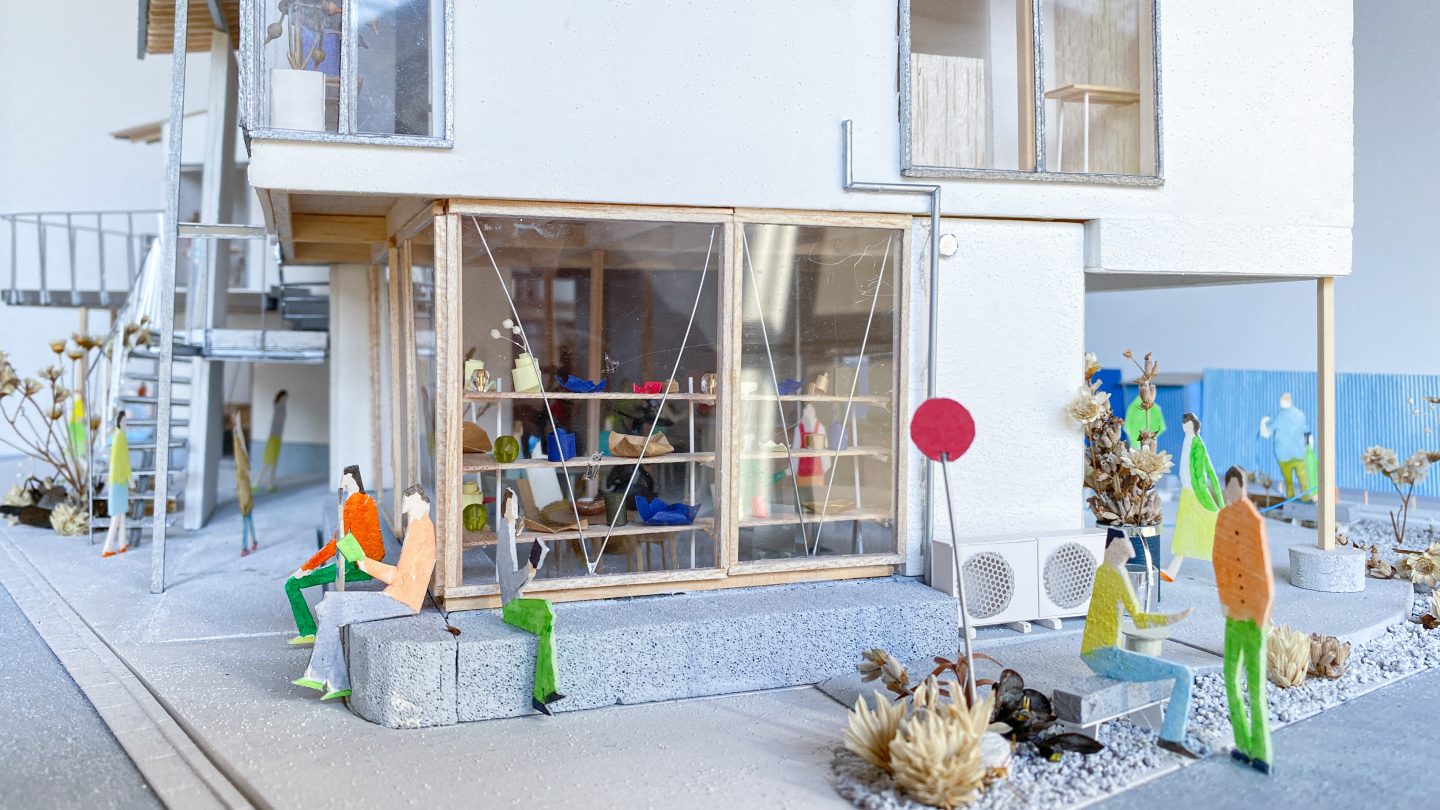
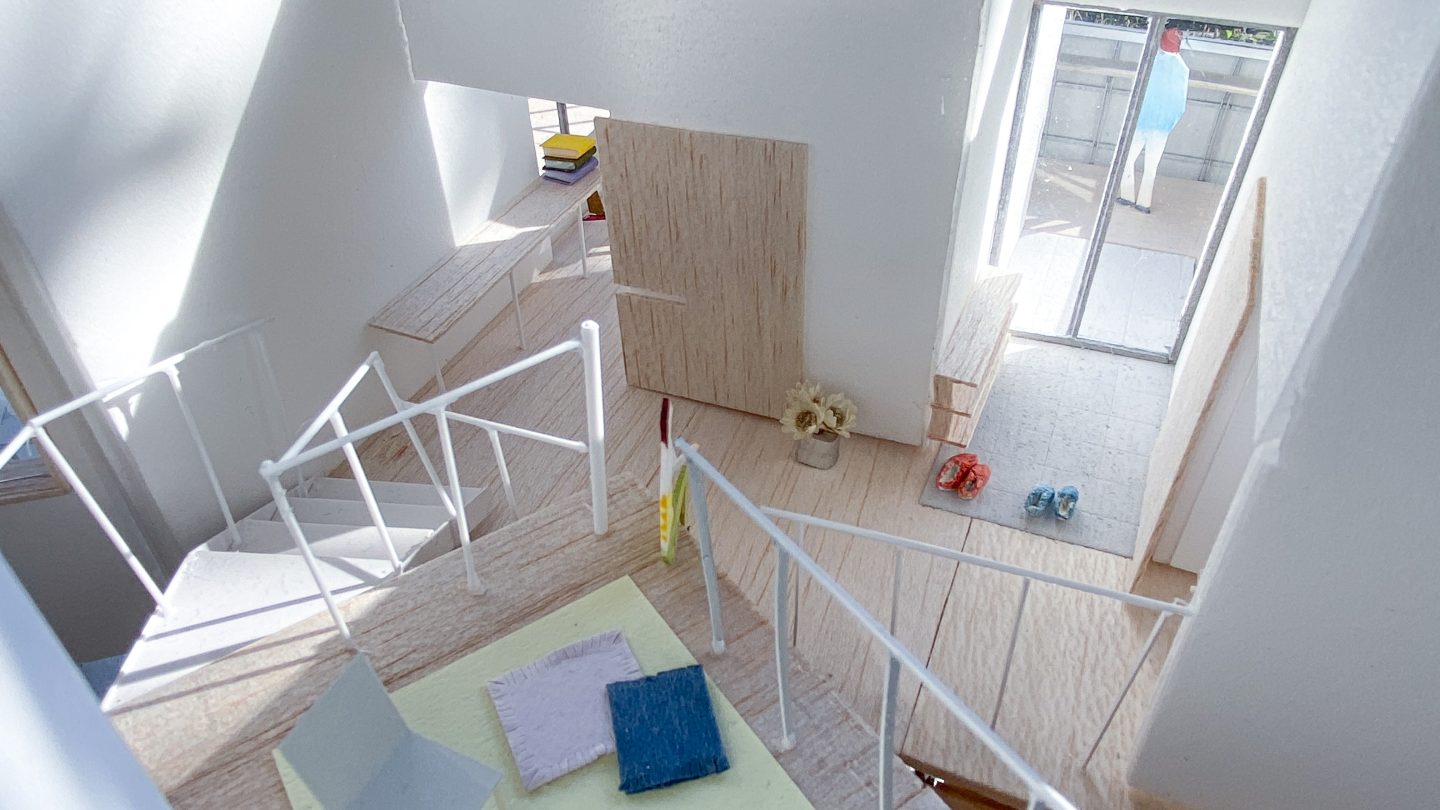
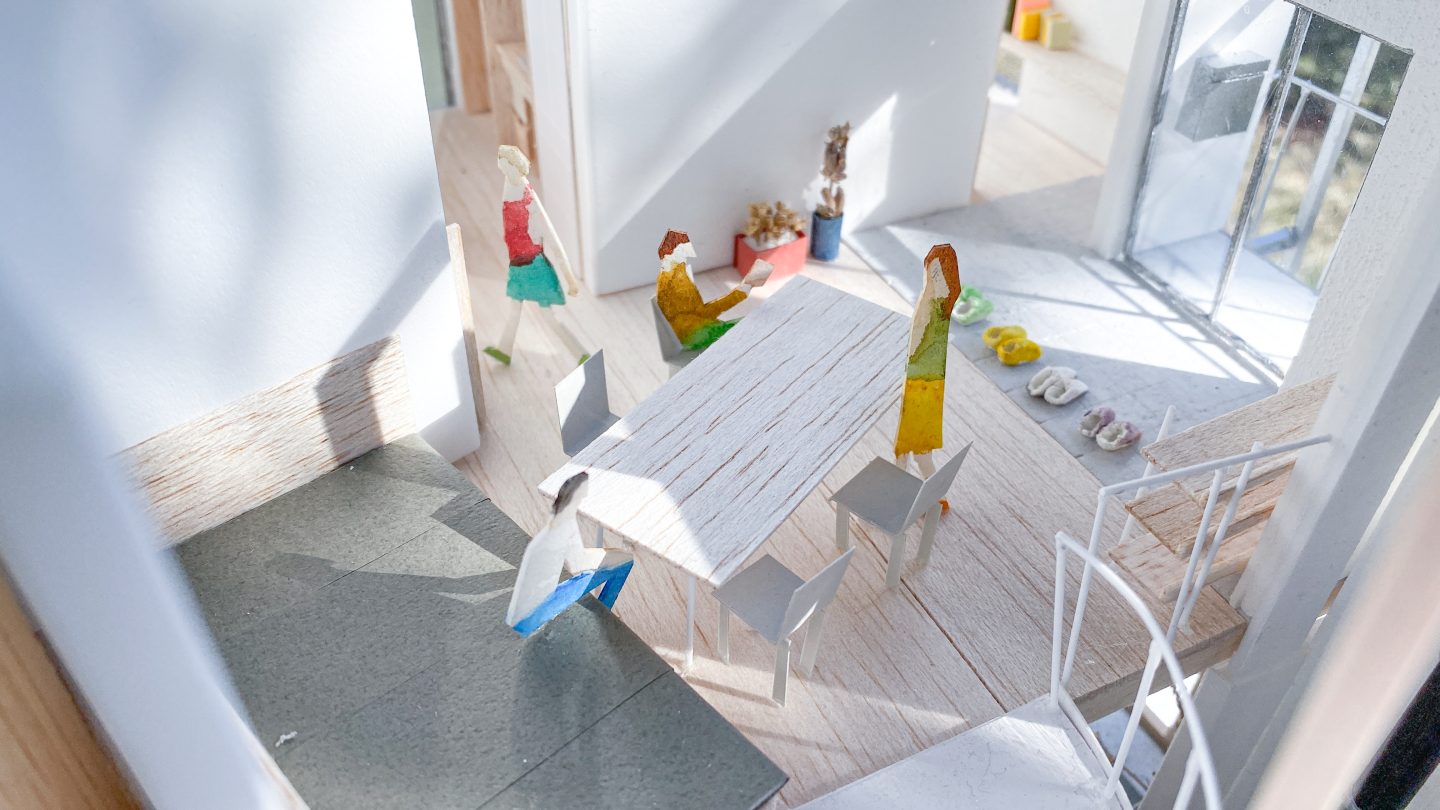
1階をカフェ、2階を共同住宅とした複合建築である。構造を3つの棟に分解し、まちに対して躯体をずらして繋いでいくことで、地域のスケールや風景の向きに呼応する居場所の連続で作りたいと考えた。1階は、地域食堂・カフェ&ギャラリー・工房が、就労支援事業の場としても重ね合わせて使われる。数人で集まってグループで調理補助が行えるカウンター、数人で輪になって作業するルーム、外に近い窓辺、ひとりになってクールダウンできるような小さなポケットなどをひだ状に引き伸ばし、さまざまな身体と心を置くためのムラのある環境をワンルームの中に連らせている。軒先は、法人が運営する畑の野菜を販売する直売所や、登下校する小学生のひと休みスポット、隣接するバス停でもあり、まちの時間によって内外に多様な居場所が絡まるように境界を設えた。
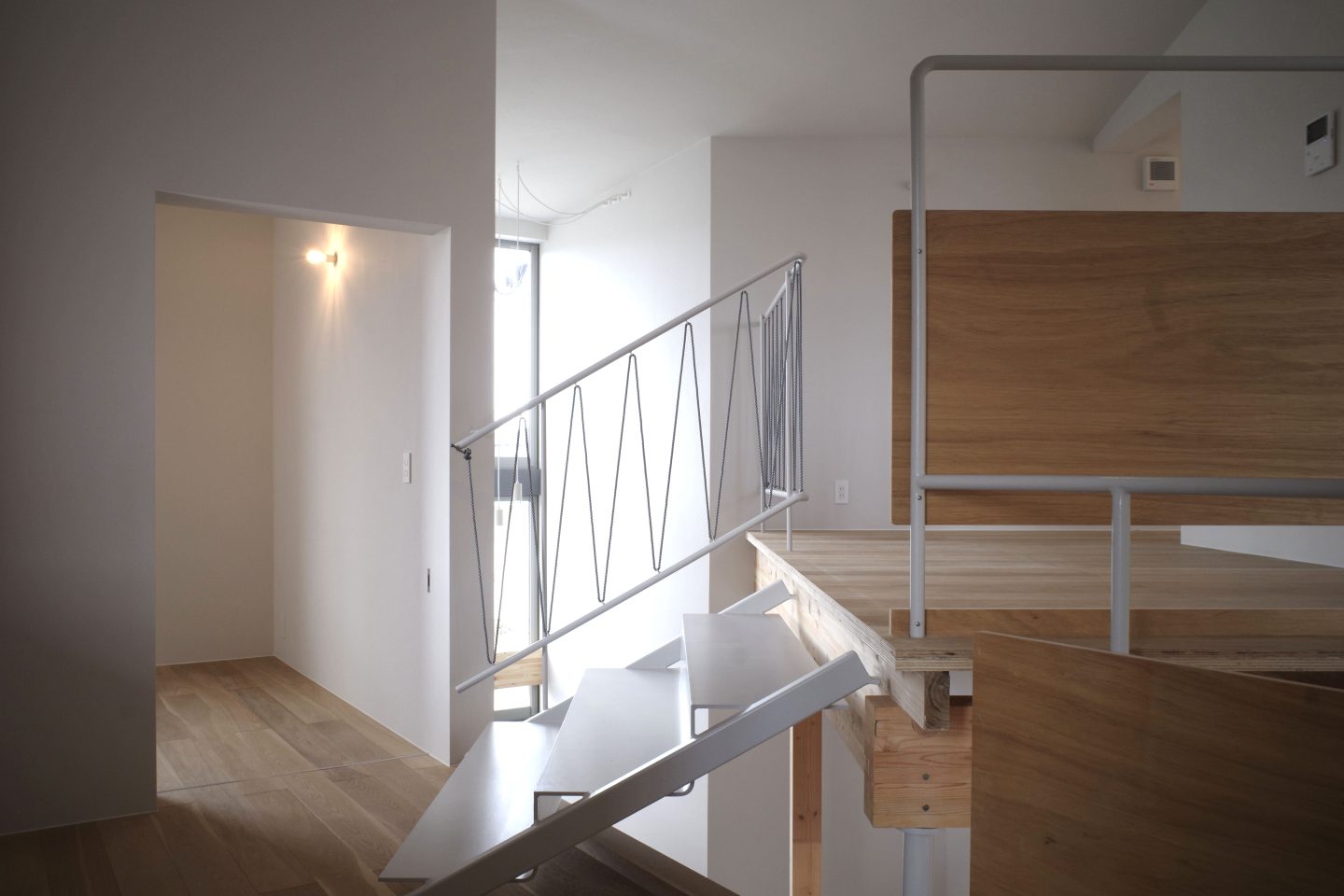
2階は、法人のスタッフのための寮で、主に外国からやってきた研修スタッフの生活の場でもある。単なる住まいとしてでなはく、語学や文化を共有し互いに学んでいくための場所として考え、吹き抜けを介してまちと気配を交換したり、個室と共用部の関係性を曖昧にしたりなど、躯体のズレや向きの関係によって、コミュニケーションのきっかけを散りばめている。施主である社会福祉法人ライフの学校は、まちをまるごと「学び舎」として捉え、老人福祉施設の運営を主体に、畑や保育などの地域活動も展開している。福祉事業を超えて、福祉と繋がった文化活動を地域で育み、気軽で身近なまちの居場所として、まちの生活や風景、地域の方たちと豊かな関係性を結んでいくための拠点となることを目指した。
This project is a mixed-use building with a café on the first floor and apartments on the second.
By dividing the structure into three wings and connecting them while slightly shifting each volume in relation to the town, we aimed to create a sequence of spaces that respond to the community’s scale and the orientation of the surrounding landscape. The first floor houses a community restaurant, café and gallery, and workshop, which overlap in use as spaces for employment-support activities.
Counters where small groups can assist with cooking, rooms for circular group work, window-side areas close to the outdoors, and small pockets where one can cool down alone are stretched out like gentle folds, creating a varied environment that accommodates different bodies and minds within a single room. The eaves also serve multiple functions: a direct-sales stall for vegetables from the organization’s farm, a resting spot for schoolchildren on their way to and from school, and the adjacent bus stop.
We shaped the boundaries so that a variety of indoor and outdoor “places to be” intertwine with the everyday rhythms of the town.
The second floor serves as a dormitory for the organization’s staff and is also a living space for trainees, mainly from overseas. Rather than treating it simply as a residence, we conceived it as a place where people can share language and culture and learn from one another. Through voids that exchange presence with the town, and by softening the boundary between private rooms and shared areas, the slight shifts and orientations of the building volumes create casual opportunities for communication.
The client, the social welfare corporation “Life no Gakkō,” views the entire town as a “school.” While centered on operating elderly welfare facilities, they also cultivate community activities such as farming and childcare.
Beyond welfare services alone, the project aims to nurture cultural activities rooted in welfare, becoming a familiar, approachable place in the town, a base that weaves rich relationships with daily life, the local landscape, and the people who live there.
- 設計|Design
-
建築|Architecture冨永美保・林恭正・柳沢優志・市川竜吾/tomito architecture
Miho Tominaga, Yasumasa Hayashi, Yūshi Yanagisawa, Ryugo Ichikawa /tomito architecture -
構造|Structure鈴木芳典・鶴田翔/TECTONICA
Yoshinori Suzuki, Tsuruta Shō/TECTONICA -
設備アドバイス|MEP Consultation山下直久・松井知行/Comodo設備計画
Naohisa Yamashita, Tomoyuki Matsui/Comodo -
サイン|Signage長谷川哲士/minna inc.
Hasegawa Satoshi/minna inc. - 工事|Construction Work
-
監理|Supervision冨永美保・市川竜吾・柳沢優志・林恭正/tomito architecture
Miho Tominaga, Ryugo Ichikawa, Yūshi Yanagisawa, Yasumasa Hayashi / tomito architecture -
施工|Construction八鍬英幸・菱沼真紀夫/ジャパンビルド株式会社
小柴剛・鈴木祥晃/株式会社ユニホー
Hideyuki Yakuwa, Makio Hishinuma / JAPAN BUILD Co., Ltd.
Tsuyoshi Koshiba, Yoshiaki Suzuki / UNIHO Co., Ltd. - 写真|Photo
-
新建築社写真部
SHINKENCHIKU Photo dept. -
tomito architecture
- 概要
-
所在地|Location宮城県仙台市若林区
Wakabayashi Ward, Sendai City, Miyagi Prefecture, Japan -
主な用途|Primary Use寄宿舎+飲食店+就労継続支援B型
Dormitory + Restaurant/Café + Type B Employment Support Facility -
敷地面積|Site Area305.67㎡
-
建築面積|Building Area153.54㎡
-
延床面積|Total Floor Area225.44㎡